Showing posts with label Australiana. Show all posts

Monday, 27 February 2017

Feeling Blue (the Shearer)

One of the great sadnesses of being away from the homeland for a long time is missing out on all the little bits and pieces of Australian news that don't make it into the media here in Britain. I gather the big stuff and a lot of political nonsense from my social media feeds and from my too-rare forays into internet radio, but all too often I miss things that I really would have liked to have known about, particularly things that touch on some of my more fringe interests that I don't share with that many of my Facebook friends. The longer I'm here, the more I feel myself losing touch with the little things that made up my identity as an Australian.

Yesterday, while hunting for the words for the next verse of a half-remembered poem (What joy! What retribution! All that blood and gore. Armless, legless, headless corpses, strewn around the floor...), I realised that the author of that timeless little number and countless others, and a familiar voice from many years of listening to my ABC radio, Col Wilson, died earlier this month at the grand old age of 89. And I didn't even know! Boom, right in the feels.

'Blue' was one of that dying breed, in the CJ Dennis mould, that we know fondly as 'bush poets', a doggerilist of the highest order who pumped out verse after rhyming verse for years and never seemed to run out of ideas. There was no air of superiority, no pretensions, rarely a change of meter, just a sharp wit, a keen eye for irony, and an authentic, down-to-earth voice that I've always appreciated and today feel bereft without. Blue would write poems about silly little every day conversations, his kids, politics, whatever came into his head. I first met his verses in the poetry collections that I used to devour whenever I got the chance (I grew up on rhyming verse, a pasttime that goes a long way towards explaining my fondness for folk music today), and then later I heard him weekly on the radio, and his thoughts were always a bit of fun and good for a laugh.


I don't know what else to say. I'll miss the old coot and his songs and I wish I had half his unashamed confidence in my own art. It seems only appropriate to leave the last word to Col and since I'm here in the UK there's really only one verse I could go with:


God save our gracious thong.
Keep our feet safe and strong,
And free from pong.
Wear them instead of shoes,
To pubs and barbecues.
Health, happiness to all of youse,
God save our thong.

Wednesday, 5 August 2015

Blaugust 6/31: Dr. Dolittle's Circus

Thursday's are the day that I've left open and free-form for Blaugust, in the hopes of inspiring something new and exciting instead. In the absence of that, though, let me show you a political cartoons I made this week.

(Warning: This post contains Australian politics and racy language. The two often go hand-in-hand for some reason.)

If you don't follow Australian politics, you're missing out, as the last few weeks have been completely focused on the important business of finding out which of our national politicans has most profitably misused their parliamentary travel allowance. There have been many interesting cartoons, and a seemingly infinite number of helicopter memes, made out of the ensuing scandal, and as the dust settles our government again has egg on its face and the Speaker of the House has resigned having collected enough of them to make a record-breaking omelette. If you're a Usonian or otherwise unfamiliar with Australian politics, you might think that the Speaker is a powerful person: the head of their party, or third in line for the Prime Ministership or some nonsense like that, but that's not how our system works. In Australia the speaker is a largely ceremonial role whose job is to manage the house in session, which appears to the public to involve mostly throwing out people that you don't like, so it could easily, and perhaps more happily, filled by a bit player or even a non-entity, and given the current climate, that might be exactly what the government goes looking for.

This means that we need a new speaker, and the man tipped for the job is none only than the local member for us here at Parliament House, Dr. Andrew Southcott, who is known far and wide (mostly amongst his political opponents, for some reason) as Dr. Dolittle, as the man has an incredibly low profile for someone who's been in the for almost 20 years now. Since it's an obvious joke that I'm sure all the real cartoonists with actual skill will be making some better variant of soon enough if and when he is announced as the man to fill Bronwyn Bishop's comfortable chair, I thought I'd better get this little number up now, just in case.


We have a great tradition of political cartoons in Australia, and the working cartoonists of the country go a long way to building a language that even those of us with no artistic skill at all can use to make their idea (relatively) clear to a pre-prepared audience. By this point, I hope that most Australians that have been anywhere near the zeitgeist could tell that Hercules the strongman here is dressed as Prime Minister Tony Abbot, I mean, he's a man in a blue tie, with a surf-life saving cap on. The low-profile Andrew Southcott (as played by Dr. Dolittle himself) is more obscure, of course (I've never seen another cartoon with him in it), but I suspect that will no longer be the case if he gets the nod early next week.

I know it doesn't count as a real cartoon, but in a field where the below image is still considered a work of high art, maybe I have a shot. All in all, I'm rather proud of it!


Fare well until tomorrow, gentle readers.

Tuesday, 13 March 2012

Read: I Can Jump Puddles

We're having some technical internetty problems here at Leaflocker HQ, stay tuned for the completed reveiw and quiz just as soon as we can get them ironed out...

Australian books, to speak broadly and generalise, are a little bit like Australian film, vividly told, deeply emotional and full of sex scenes (and by 'sex scenes' I generally mean 'rape'). In fact, I once watched a marathon ten Australian films up until the first sex scene in each and spent a grand total of just three hours and ten minutes in front of the TV before going to bed disgusted with the Australian film industry. Thus it's with great trepidation that I pick up an Australian book or film, expecting the worst of human nature.

This one is an autobiography of Alan Marshall, a boy with crippling polio set in turn of the twentieth century rough and tumble rural Victoria, what unspeakable things wuld happen to this poor, defenceless crippled child...

I steeled myself and began to read...

Page 123:


Reading Progress:
Number of Books read: 9
Australian dividend: 2.045
Science Fiction dividend: 2.5
Fantasy dividend: 3.5
Biography dividend: 2.5
Mystery dividend: 0.5

Probably Next Up: Morris West, Shoes of the Fisherman/The Devil's Advocate/The Salamander (provided that I finish the Salamander)

Wednesday, 10 November 2010

Wednesday Quiz in Exile XI: Location, Location, Location

The penultimate week of the first season of the Wednesday-Quiz-in-Exile is a game of photo-identification. Below are 12 sets of three photos, all taken in or of one of Australia's World Heritage Areas. All you have to do is name the location (or the World Heritage Area, where it has a different name (two ways to win!)) to score the points.

Name that place.
1.
2.
3.
4.
5.
6.
7.
8.
9.
10.
11.
12.
Please leave your answers in 300x200px format in the comments.

Tuesday, 2 November 2010

Wednesday Quiz in Exile X: Once Upon a Time...

It's that time of the week again, time for the Wednesday Quiz in Exile in it's tenth week of its first, and hopefully last, 12-week season, which this week is focused on the short, bloody and generally tragic history of Australia since European occupation. Below are the names of 12 actual events in Australia's history, all of which changed Australia dramatically in some way, all you have to do is let us know which of these descriptions are true and accurate representations of events as passed down by the history books, and which are fallacies and misdirection designed to fool you into looking woefully and immeasurably ignorant, or worse, American. Looking up answers in any way will be judged harshly by history.

Did these historic events go down like this?

1. The Dismissal, 1975
The Whitlam Labor government was elected in 1972 without a senate majority, and in 1975 the Coalition began blocking appropriations bills until a House of Representatives election could be called. When Whitlam refused to call the election, the Governor-General removed him from office and appointed the leader of the opposition, Malcolm Fraser, as PM. Fraser passed the appropriation bills (taking advantage of the confusion in the Labor ranks) and the parliament was dissolved in a double dissolution. Though little constitutional reform resulted from the incident, the nature of Australian politics was changed forever.

2. Australian Antarctic Expedition, 1911
In November 1911, Robert Scott and his team set out to travel to where no other man had ever been, the South Pole. After a two month trek , the 5 of them reached the Pole, only to discover that Roald Amundsen had beaten them by two weeks. Defeated, they set off back north, but they would never make it home. One died falling down an ice shelf, an the other four were running out of supplies, despite the selfless sacrifice of Oates with the famous words “I am just going outside and may be some time”, the remaining three died in March and would not be recovered for another 8 months. Scott and his men would become national heroes and inspiration.

3. SA-VIC Border Dispute, 1868
Due to an error in calculation, the South Australian and Victorian governments both laid claim to a 3.6km wide stretch of land on their border. Although the land was officially to the west of the agreed border, Victorian squatters had settled the area and refused to move out. Matters came to a head in April 1868, when a party of Victorian soldiers fired on and killed 4 South Australian farmers for trespass near the town of Serviceton. South Australia began mobilising troops, but to avoid conflict the Victorian government paid 215,000 pounds in reparations and the disputed territory has been considered Victorian ever since. The incident is considered Australia's first and only 'civil war', and is one of the major reasons for the deep-seated and bitter SA-VIC rivalry.

4. Gallipoli Campaign, 1915-1916
The Australia and New Zealand Army Corps was formed to serve as part of the attack on the Gallipoli Peninsula by Allied forces in April 1915. On April 25th, a day NOW celebrated as ANZAC day, Allied troops landed on the beaches, and they would remain there for 9 months, ultimately making few gains. When the Allies finally retreated in January 1916, 500,000 of the 9,000,000 men who served there on either side were casualties. This is widely considered to be the true birth of the Australian conscience independent from Britain, and French and British contributions in the theatre are often ignored in Australia, though the Turkish forces are acknowledged.

5. Egon Kisch Visit, 1934
When famed Jewish Communist Egon Kisch reached Sydney to speak at anti-Nazi events in 1934, he was denied entry. Australian law at the time dictated that any visitor to Australia could be turned back if they could not demonstrate fluency in a European language. Kisch was asked to write the Lord's Prayer in Scotch Gaelic, and when he was unsuprisingly unable to do so, he was taken into custody. The language test remained part of Australian Immigration policy until 1958, but the Kisch case was critical in its eventual removal.

6. Ash Wednesday, 1983
On the 16th of February 1983, numerous bushfires caused the deadliest bushfires in Australia (up to that point, we've since recently passed the terrible record), killing 75 people, 340,000 sheep, 18,000 head of cattle and destroying 7000 buildings across South Australia and Victoria, at an estimated cost of 1.7 billion dollars. This became known as Ash Wednesday across the country, except in South Australia, where another fire had claimed that name just 3 years earlier, and resulted in Australia developing one of the world’s most effective and modern regional fire services.

7. America's Cup, 1983
After 132 years of successive victories, the New York Yacht Club was challenged by the Perth Yacht club for the oldest continuous sporting prize in the world, the America's cup. After being 1-3 down after 4 races, the patriotically named Australia II equalled the scorecard, and in a nationally telecast final race won the Cup for Australia. Inspired by the victory, PM Bob Hawke informed the media that morning in his usual larrikin fashion that "Any boss who sacks anyone for not turning up today is a bum". Australian sporting smugness has never again known such lofty heights.

8. WA Referendum, 1933
In 1933, Western Australia, fed up with the focus of the federal government of the Easter states, held a state referendum in which 65% voted to secede from Australia and return to being a governed British colony, they even made a flag up and everything. It was sent to London, where the British government decided after 18 months that it was a federal matter for the Australian government to decide. Needless to say it never came to a vote at a Federal level. Thus, short of declaring war, no state can successfully secede from Australia without the agreement of the other states and the federal government.

9. Batman's Treaty, 1835
On the 6th of June 1835, John Batman signed an agreement with aboriginal elders in the area around modern-day Melbourne, buying 2,000 square kilometres of land for a years supply of red shirts, jackets and scissors. Most probably the elders (if they even were elders) didn’t know what they were signing, but it was the first recognition of Aboriginal ownership of the land by the European settlers, and would be an important part of the native title debate. When the Governor found out about Batman’s treaty and it’s implications for the British claim on the rest of the country he immediately absolved the treaty.

10. Mabo Vs Queensland (II), 1992 (Earlier typo has been removed, thanks John)
On behalf of the Meriam people of the Murray Islands, in 1992 Eddie Mabo (and other, but frankly their names weren’t as cool) contended that the Meriam people were the owners of the Murray Islands. The exact proceedings are somewhat complicated to describe here, but the general vibe is that the High Court ultimately ruled that the idea of Terra Nullius, or unoccupied land, did not apply, and that Australia’s indigenous people had native title rights to Australian territory.

11. Rum Rebellion, 1808
Governor William Bligh was not a happy man. He’d suffered the infamous mutiny of the Bounty, and now the New South Wales Corps were mutinying over a little thing like putting their leader up on trumped-up charges and stopping their alcohol allowance and production of the early currency of the colony, rum. The Corps (the only armed men in the area) simply marched up to Government house and arrested him, and thus ended the tenure of the 4th governor of New South Wales. This led directly to the appointment of Governor Macquarie, who would loom large amongst those building the future of the Australian colonies.

12. Burke and Wills 1860-61
In the most expensive and spectacularly mismanaged exploratory expedition in Australia's history, the Victorian government funded an expedition commanded by Robert Burke, in an attempt to make the first overland passage from the South to the North of the continent. Burke was not an experienced bushman, and though the party eventually travelled 3250 kilometers north they were forced to turn back just 5km from the coast, and came at a terrible cost. When Burke and Wills returned to their base camp in Copper Creek 9 months after they began the expedition, they found that their support team had left for home just that morning having waiting for 5 weeks more than they were directed, and short of supplies, they both died there. The expedition left Burke and Wills as Australia's most famous explorers, much to the chagrign of South Australians.

Leave your answers, with citation where appropriate, in the comments.

Tuesday, 26 October 2010

Wednesday Quiz in Exile IX: Pin the Tail on the Country

While Michael5000, is still pretending that he's not writing quizzes, but is instead concentrating on dorkfest, this antipodean blog is providing an antipodean alternative.

Sorry for the interruption to our regular service, the internet is not always our friend. This weeks quiz is not a happy camper, thus we bring you what was to be next week’s quiz. This quiz will test your geographical knowledge and also how much you’ve been paying attention for the last few months. All you have to do is accurately position each of these Australian locations according to the grid. Each point correctly placed will earn you 5 points up to a maximum of 120, and odd numbers of correct answers will be rounded up the nearest 10 points, thus you need only 23 out of 25 to score full points in this admittedly difficult challenge.

In which location on the grid are these national landmarks?

1. Sydney: Capital of New South Wales, largest city in Australia, holder of the 2000 Olympics, and perennial winner of the most famous city award. First landing place of James Cook in 1770.
2. Melbourne: Capital of Victoria, second largest city in Australia, holder of the 1956 Olympics, and perennial coveter of the most famous city award.
3. Canberra: National capital city, a planned city made the capital because Sydney and Melbourne couldn’t decide who was more important.
4. Brisbane: Capital of Queensland. I need to go back there and have a look sometime.
5. Hobart: Capital of Tasmania, Australia’s Apple Isle.
6. Adelaide: An oasis of class and sophistication in the midst of a world gone mad.
7. Perth: Capital of Western Australia. Like Adelaide, but prettier and further away.
8. Mt. Kosciusko: The tallest mountain in Australia, it’s generally pretty cold.
9. Uluru: Monolith and perennial winner of the most recognisable landmark award, to the chagrin of the Sydney Harbour Bridge.
10. Lake Eyre: Australia’s largest lake, generally dry, home of the exceedingly optimistic Lake Eyre Sailing Club.
11. Alice Springs: Central city most famous for its Todd River Race, the boat race that was cancelled in 1993 because for the first time in 50 years there was water in the river.
12. Hutt River Principality: Famous micro-nation in regional WA, ruled since 1970 by Prince Leopold, yet unrecognised by the Australian government.
13. Broken Hill: Mining town that should be familiar to returning quiz participants.
14. Ballarat: Victorian mining town that was the centre of Australia’s first gold.
15. Poeppel Corner: Point in the Simpson Desert that marks the boundaries of 3 different states/ territories.
16. Cairns: Tropical tourist city and gateway to Cape York.
17. Town of 1770: Location of Cook’s second mainland landing. Now a tourist town operating cruises on amphibious vehicles.
18. Pt. Hedland: Australia’s largest port, servicing the booming WA iron mining industry.
19. Great Victoria Desert: A great big patch of emptiness. It’s not in Victoria.
20. Big Desert: A small desert, by Australian standards, just north of Little Desert.
21. Hamilton Island: Biggest of the Whitsunday islands in the Great Barrier Reef.
22. Rum Jungle: Australia’s first uranium mine, appropriately named after an alcoholic beverage.
23. Eucla: Little town in the middle of the Great Australian Bight. Famous for being in the middle of the Great Australian Bight
24. Cape Grim: Site of the massacre of as many as 60 aborigines by 4 shepherds after the tribe drove a flock of sheep off a cliff. Locals used to call the area Victory Hill, but the name was changed for some reason.
25. Kakadu National Park: World Heritage site and home of some the most famous rainforest and waterfalls in Australia.


Spin around three times and leave your answers in the comments.

Monday, 25 October 2010

Read: Worth the Wait

WARNING: THIS POST CONTAINS HORRIBLE PROSE.
I haven't done any writing on a large scale (more than a couple of paragraphs or a bunch of dot points) since high school, and boy-o can you tell. Since the idea of this blog was to get back into the habit, I'm releasing this anyway, after weeks of trying and failing miserably to improve it to some kind of readability. You have been warned. Rest assured that I am suitably embarrassed and am taking any steps I can to return my writing quality to its former glory.


-----

Inspired by a terrifying list of books to read and the South Australian Redbacks participation in the Champions League Twenty20 last month, I sat down to read Worth the Wait, an autobiography by much-loved former redbacks captain and all-round nice guy, Darren Lehmann.


Before we get started, it's worth mentioning that Darren Lehmann was a childhood hero of mine, the implacable rock in a South Australian team that, more often than not, much more often than not, turned out to be full of nothing else but sand. I'm also a big fan of autobiographies, having had my thirst for the first-person narrative inspired by the wonderful Harpo Speaks, so I knew what I was getting myself in for.

Like the Redbacks Champions League campaign, though it looked a bit rough around the edges, it was off to a promising start. The depiction of a young Lehmann and his sudden rise from local, to grade, to state cricket had just as much promise as the Redbacks downing of the local favourite Highveld Lions by 11 runs. The writing certainly let a few go through to the keeper, and there were a few false starts, but it was a good solid victory and something to build on for the rest of the competition.

Anecdotes from his early life in the South Australian team, his double life as a hot-shot middle-order batsmen by weekend and a factory worker in Adelaide's disreputable Northern suburbs during the week were all top notch and blended together to give the book a flying start, like the Redback's excellent opening partnership in their second game against the high-profile Mumbai Indians. But I had the sinking feeling that the enthusiasm being put into this part of the competition meant that it couldn't possibly last.

Then came the crescendo, the fight with the Bangalore Challengers for the top spot in the group, the 1994/95 South Australian Sheffield Shield and Lehmann's One Day International career. Sure, we won, but it could have definitely been portrayed...better. The way it was all glossed felt like it was just a prologue to something more, something just around the corner where all the actual meat in the book was going to come, where we could really let our batsmen off the leash to play all the big shots and score a massive victory.

Only, it never came. For Lehmann, the focus of the book was his playing for Australia in Tests and the tragic death of David Hookes, his mentor and the undisputed King of South Australian cricket, in a bar-room brawl. Like South Australia's game against Guyana in the Twenty20, there was a lot of build up and a lot of excitement, but unlike the earlier sections it didn't get the audience involved, and generally involved some pretty sad cricket. There were some fun little anecdotes about the other members of the Australian team at the time, but nothing worth reading the whole book for.

The aftermath, of course, is tragic. For South Australia, they were knocked out of the competition in the semi-final by the Warriors, who went on to lose to Chennai in the final. For Lehmann, this book was written during the tour of Sri Lanka in 2005-06and ends with a little note of hope for his career in the future and prospects as a leader in the Australian team he'd fought for so long to get into. Little did he know, but he had just 6 tests left in his career before he was unceremoniously dropped, never again to wear the Baggy Green.

So, Worth the Wait wasn't, but it was probably worth the $8 I paid for it in a buy two, get one free deal. I'm glad it wasn't ghost-written, since it was at least genuine and heart-felt, but when you wade through a book like this you can see why ghost-writing is such an important part of the industry.

If anyone is interested in owning it, perhaps in the vain hope of finding out a little about one of your favourite cricketers through the eyes of one of mine, I'd be happy to post it to you, as I don't feel any particular need to keep it in my collection.

---

Favourite Quote:
Glenn McGrath is a pest...You will be sitting there minding your own business and suddenly a sugar sachet will be emptied in your hair or a feather will be tickling you behind the ear and you think it's a fly. He basically gets bored very quickly and takes it out on everyone else. It must be a fast bowler thing because Merv hughes used to do exactly the same thing.

Page 123:
Gone are the times when you would start enjoying the first beer five minutes after the last ball was bowled. Now there are ice baths, warm-down sessions, all stuff I have to say I don't enjoy because the ice baths are too bloody cold!
---

Reading Project Status
Read: 1/74
Australian Ratio: 1:0
Next Up: Songs of the Dying Earth, G.R.R. Martin et al.

Tuesday, 19 October 2010

Wednesday Quiz VIII: Ministers Prime

Michael5000, internationally renowned for his famous Monday, Wednesday and Thursday quizzes, is taking a well-earned break from quizmastery, so I’ve taken up the reigns to provide a season of one-eyed quizzes from a flawed Australian perspective.

You have been provided with the portraits and brief biographies of twelve famous men. All you have to do is identify which of the twelve have been Prime Ministers of Australia and which have not. The bios are all accurate, except that titles have been changed in some of those that have not been Prime Minister to make it look like they have. Identify the furphies to score points towards winning the grand prize, and please avoid collaborating with others or researching the topic, as parliamentary censure and penalties for high treason will apply.

Was this man an Australian Prime Minister?

1. No list of Australian politicans would be complete without Harold Holt, the Liberal most famous for his disappearance while swimming in 1967 after just 22 months in the top job after more than twenty years of experience as a government minister. Whether abducted by Chinese submariners or simply swept into the Pacific, Holt's (alleged) death left an impact on the minds of all Australians, which is more than can be said for his government, which increased Australia's involvement in Vietnam, following the infamous "All the way with LBJ" policy.


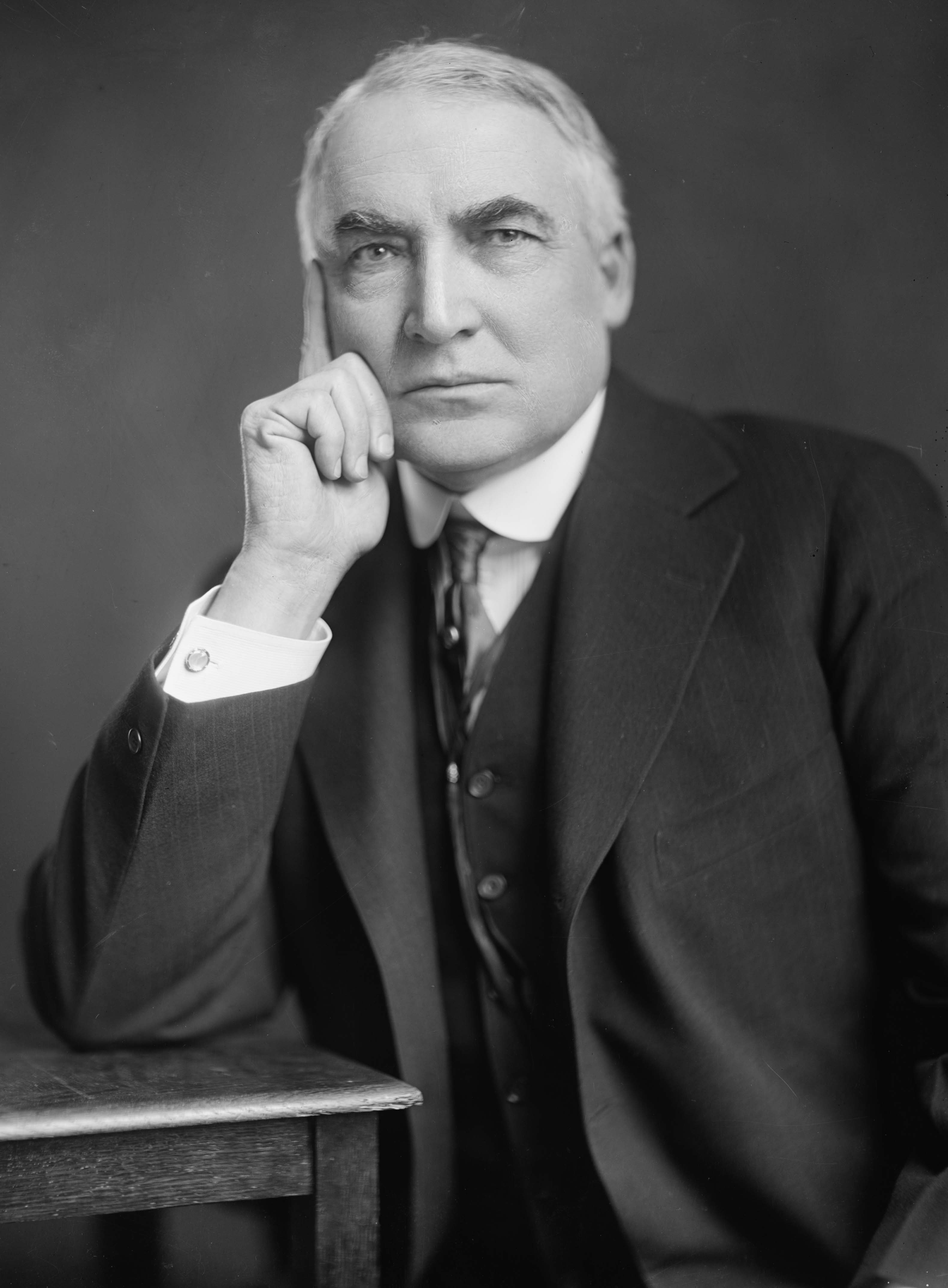
2. Despite his republican leanings, an unpopular position during and immediately following the first world war, Warren Harding, former teacher and newspaper baron began his ill-fated Prime Ministership in 1920 with 61% of the vote, which was at the time the largest ever margin in a national election, on the back of policies of isolationism and nationalism (and helped by an insider’s knowledge of the press). His government reduced post-war unemployment by 10% and established good relationships with many countries (with a distinct pro-American stance), but Harding died suddenly in 1923, and in the wake of his death came allegations of corruption and bribery amongst his cabinet that shook the establishment and resulted in his lasting unpopularity even into the present day.


3. Universally loved in the North and universally infamous in the rest of the country, Joh Bjelke-Petersen was Premier of Queensland from 1968 to 1987 before his incredible “Joh for Canberra” campaign in 1987. His government promoted huge industrial growth, particularly in Bjelke-Petersen’s home state, and was later found to have accepted large bribes in return for government contracts for a number of projects. When Bjelke-Petersen was prosecuted for perjury in 1993, the jury was deadlocked, though allegations of jury tampering were rife. When Joh was knighted, his wife (a sitting federal Senator famous for her pumpkin scone recipe) became the Senator Lady Bjelke-Petersen, which I find inherently funny. (What do you think, Aviatrix? Would “Senatrix” be appropriate in that situation just to prevent the horrible dual title “Senator Lady”?)


4. In a life straight out of a Broadway musical, John Gorton was born the illegitimate son of 'Alice Sinn' in 1911, travelled to England an graduated from Oxford in 1932, was shot down over Singapore at had his face crushed when he crash-landed upside-down in 1942, became a Liberal Minister in 1958, resigned in 1968 to contest Harold Holt's newly vacant seat, and became Prime Minister 20 days later. He was PM for less than a year before losing an election, being sacked by his own party and replaced by Malcolm Fraser. He remained an MP until 1975, and reportedly detesting being in the same room as Fraser until he died in 2002.


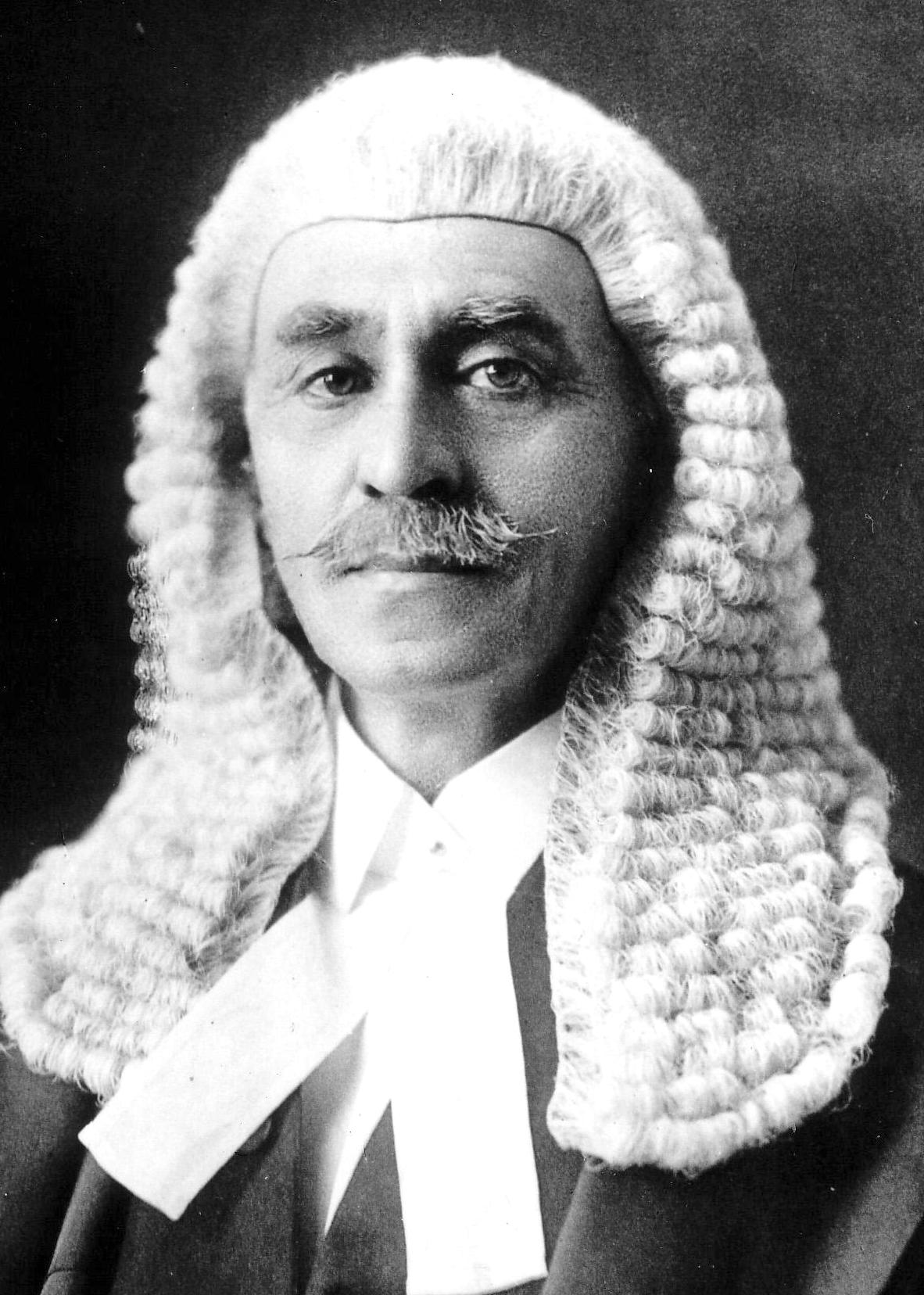
5. The first Prime Minister to be born in Australia, Isaac Isaacs sat in the first parliament in 1901 as a minister in the Barton government, but his perceived aloofness and unpopularity amongst his fellow politicians meant it would be a long time before he took over as Prime Minister thanks to the support of Labor heavyweight James Scullin in 1930, when Isaacs was already 75 years old. After leaving office in 1936 after a wave of support for Joseph Lyons’ United Australia party, he continued public life as a prominent constitutional law expert and a leader of the Jewish community in Australia. Isaacs was an outspoken opponent of Zionism until he died in 1949, and never saw Israel become a sovereign nation.


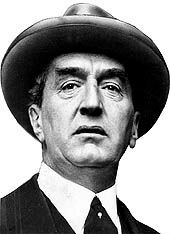
6. After studying at Cambridge and practicing law in London, Stanley Bruce joined the British Army and won the Military Cross and Crois de Guerre for his actions in France during WWI. After being injured in 1917 he travelled to Australia and was elected to parliament in 1918 and appointed Treasurer in 1921. He became Prime Minister of a coalition government with the Country Party in 1923, the first PM not to have been a member of the first parliament in 1901. A strong advocate of the White Australia policy and monarchist, he led the Nationalist Party until his defeat and loss of his parliamentary seat in 1929, a feat not to be repeated until John Howard also lost his seat of Bennelong in 2007. He helped found the United Australia party in 1931 (rumour has it that it would have been the ‘Bruce Party’ but Joseph Lyons switched the name at the last minute).


7. Born in England in 1865, George Windsor served in the Royal Navy before travelling to Australia in 1901, and rose quickly to preside over the first majority government in 1910. Despite his high popularity his leadership was marked by his declining health and Joseph Cook rose to PM after just over two years, but his tenure included many reforms of parliamentary process, international relations and vast restrictions of the power of the European aristocracy. A strong and outspoken monarchist, he played an essential role in the establishment of the Statute of Westminster (he would later be played by David Troughton in the award-winning Australian TV series, All the Kings Men) and he retained a strong political influence behind the scenes during WWI and right up until his death in 1936.


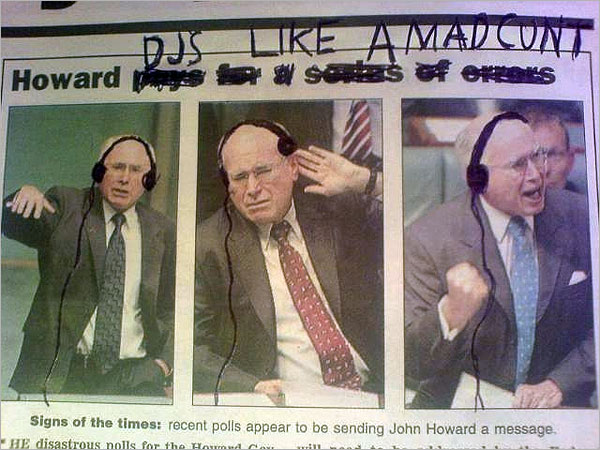
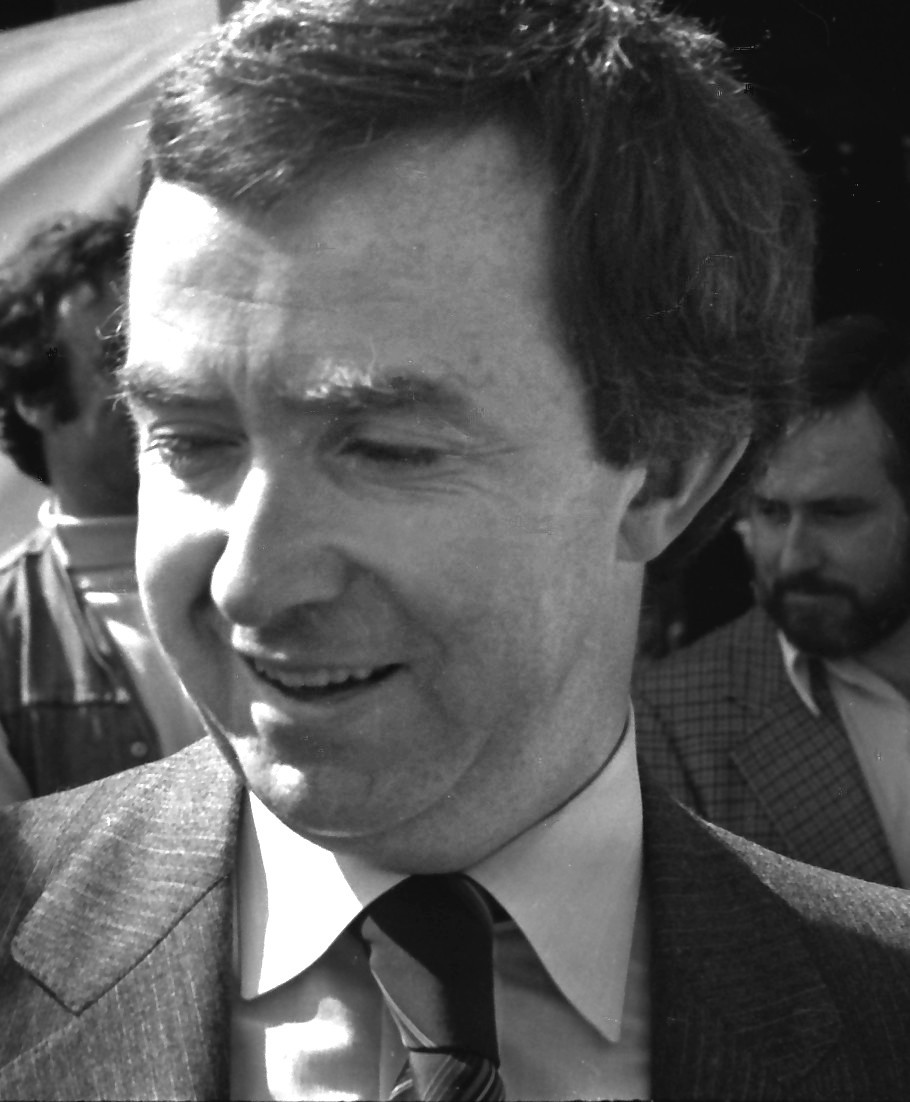
8. Joe Clark, who also began his professional life as a journalist, was prime minister for only 9 months in 1979-1980. Sandwiched between two extended Liberal party terms, his government was defeated in a no-confidence motion in early 1980, ending the leadership of Clark, still the youngest-ever PM in any Commonwealth country. A repeat-offending politician, Clark returned to politics running for and winning the seat of Kings-Hants as a “Progressive Conservative” candidate in 1998 and holding it until as recently as 2003. He currently lives in Canada since being assaulted in the street after admitting to being a former prime-minister.


9. A keen debater with a vicious sense of humour, George Reid was a Scottish immigrant who became the first opposition leader and eventually prime minister as head of the ill-fated "Free Trade" party, and practiced privately as a lawyer the whole time to supplement his income. In between, he resigned his seat in Sydney, then won in back in the subsequent by-election as a kind of private referendum on his system of equal voting electorates. After the free-trade party lost power (they instituted trade tarriffs, which gave them little support from their voting base) in 1905 he re-named it the "Anti-socialist party", and remained at its head until the formation of the Commonwealth Liberals. He resigned again in 1909, and his seat was left empty until the 1910 election (possibly to prevent him standing and winning at a by-election yet again).


10. A consummate politician, Andrew Peacock became president of the young liberals in 1962 and president of the Liberal Party of Victoria in 1965 before inheriting the seat of Kooyong from Sir Robert Menzies in 1966. As Minister for Territories in 1972 he played a crucial role in the establishment of Papua New Guinea as an independent nation, but he became infamous for his affairs (particularly his relationship with Shirley MacLaine) as Minister of Foreign Affairs (hurr hurr) under Malcolm Fraser, which may well have contributed to his surprisingly high vote in the 1984 election against Bob Hawke. His government was unable to pass much legislation due to an opposition Senate. It couldn’t last, and after a long series of in-fights leading up to and following Hawke’s 1987 landslide the Liberal leadership would change from Peacock, to John Howard, back to Peacock, to John Hewson, to Alexander Downer and finally back to John Howard in 1995. Peacock retired from politics in 1994 and became Ambassador to the US in 1996.


11. One of only two state Premiers to become PM, Joseph Lyons left state politics to enter the federal arena, then quit the sitting Labor government in 1931 and joined with the nationalist party to form the United Australia party and become leader of the opposition. He became PM in 1932 (the 3rd ex-Labor MP to become PM in another party). His government supported the League of Nations and was extremely pro-British interest, and Lyons was a successful leader, leading the UAP to three election victories. However, as the situation in Europe worsened in the late 20's, Lyons, a pacifist, died of a heart attack (the two may not have been related, who knows?). His widow, Dame Enid Lyons, became Australia's first woman MP in 1943 and served in the Menzies ministry, and both his sons would go on to serve as ministers in Tasmanian parliaments.


12. Last but certainly not least, when Gough Whitlam became leader of the Labor party in 1967, Labor hadn't been in power since Ben Chifley's popular wartime government was voted out in 1949. Labor finally returned to power in 1972, in an election campaign in which Whitlam was told to stop humiliating his opponents, as the population was feeling sorry for them, but they, fatefully, failed to secure a majority in the Senate. In the first few weeks of his government, Whitlam used the power of the Defence Minister to exempt people from conscription to exempt all Australians, opened diplomatic relations with China (and close them with Taiwan), removed tax on contraceptives, placed sanctions on South Africa and Rhodesia and recalled all troops from Vietnam. He was famously removed from office in 1975 by the Governor-General and replaced by Malcolm Fraser when the Senate failed to support his supply bills, causing a constitutional crisis unparalleled in Commonwealth history.

Please leave your answers and domestic policy recommendations in the comments.

Tuesday, 12 October 2010

Wednesday Quiz in Exile VII: Information is Beautiful

It should come as no suprise to you that this week's Wednesday quiz is about Australia. This week we're looking at a range of different Aussie information through a medium very dear to my dorky little heart. Graphs. All you have to do is identify what the graphs represent to score points for your team and the admiration of the nation. Whoa! Whoa! (sorry, Football joke) If you could refrain from skewing the data collected by introducing factors outside of my control such as google, friends and family or other people's answers that would be better for all involved and for the scientific method in general.

Indentify the graph.

1. What's this map stolen from our friends at wikipedia show?
2. What does this graph represent?
3. What does this graph represent?
4. What does this graph represent?
5. What does this graph represent?
6. If Australia is the blue one, what does this graph represent?
7. If Australia is the blue one, what does this graph represent?
8. What does this graph represent? (And for bonus points, what specifically does the blue bar represent?)
9. What does this graph represent? (And for bonus points, where does Adelaide fit on this graphic?)
10.What does this graph represent?


Leave your answers in the comments. Remember to label appropriately and include margins of error.

Tuesday, 5 October 2010

Wednesday Quiz in Exile VI: Wealth for Toil

Some good things come out of the ground, and Australia has more than its fair share. This week's quiz celebrates the mineral wealth of Australia, all you have to do is use your problem solving skills and geographical knowledge to identify the mineral described in each question without looking them up or talking to others, offences punishable by being left in one of my many local abandoned mine shafts overnight.

What mineral is that?

1. Fittingly, considering that Australia produces 97% of the world's supply, this gemstone is the national stone, found primarily in Andamooka and Coober Pedy in South Australia, and Lightning Ridge in New South Wales. Deposits have been discovered on Mars, but the large transport costs for Martian varieties should ensure that Australia continues to be the major source for the discernable future.

2. This map (courtesy of the Department of Mining's snazzy Australian Mine Atlas, which is good for a look after you've finished the quiz) depicts historic mines of this mineral in green and current mines in red.


3. Australia has the third biggest deposits of this valuable gemstone in the world, after Russia and Botswana, and just before the Democratic Republic of the Congo.

4. Australia is the biggest exporter of this resource (clocking in at a massive 25%, or 278 million tons in 2009), which is mostly sent to China, the biggest producer, to fuel their energy needs.

5. Again from our friends at the department, this one represents mineral deposits of which metal?

6. One of the earliest resources discovered in Australia, this element was mined extensively in the mid 1800's in the South Australian towns of Burra and Kapunda, but is now found mostly at the Olympic Dam mine and in the Western Queensland city of Mt. Isa.

7. This is NOT a picture of myself and my brother (but it would have been if I could find it in time) that was taken a number of years ago in Ruby Gap, Nothern Territory, where the rivers flow literally red with gemstones. When news of this miraculous occurence got out, it caused the Australian "Ruby Rush" in the latter part of the 19th century, and thousands of people left their homes and travelled north. Too late, it was soon discovered that these were not rubies but are actually which comparitively worthless stone?

8. Australia is the biggest producer of this ore of aluminium, producing more than twice the amount of any other country. Australia's deposits are found mostly in the extreme South-West of Western Australia and in the extreme North of Queensland and the Northern Territory.

9. This is a panorama (courtesty of our friends at wikipedia) of Broken Hill in New South Wales(the Hill itself was mined out of existance almost completely decades ago), the world's largest single desosit of galena. Once home of BHP, the world's biggest mining company, the mine was once open-cut but is now entirely subterranean. Which three minerals are predominately found here?

10. This timeline depicts Australian production of what?


Please leave your answers in a carbon-neutral fashion in the comments.

Tuesday, 28 September 2010

Wednesday Quiz in Exile V: Sports Teams

It's an Australian tradition to give everthing silly names, and it's an Australian tradition to play, watch, cheer and talk about sports. Thus is should come as no suprise to anyone that it's a great Australian tradition to give our sports teams silly nicknames. All you have to do to be in the running for the prize is tell me what games these various Australian national teams represent the country in internationally. Please don't look up, consult with others or attempt to divine the answers, or you may well find yourself followed by a crowd of sledging Australians forever after.

What sport do these teams play? (Women's teams playing male-dominated sports score double)

1. Wallabies

2. Kookaburras

3. Baggy Greens

4. Steelers/Wheelabies

5. Diamonds

6. Sharks

7. Matildas

8. Jackaroos

9. Outbacks

10. Opals


Place your answers and a lungbusting team chant in the comments. All chants must be able to be approximated after numerous hours of drinking Australian beer.
Tuesday, 21 September 2010

Wednesday Quiz in Exile IV: Birds and Beasts

Michael5000 still hasn't caved in, so the Australian cousin of the Wednesday quiz is back for yet another week. I've got plenty more where this one came from, Michael, but I don't want to have to use them.

This week's quiz is on the exotic, glamourous and frequently lethal fauna of Terra Australis, possibly the most recognisable and known thing about the country both at home and abroad, utilising photos cribbed as always from that great hub of creative commons licensing, wikipedia. Avoid the tempation to look up the answers, or there's a chance of winding up stabbed through the heart by vicious sealife next time you go swimming. Not a big chance, but it's been known to happen.

Name that/those creature/s.

1.
2.
3.
4.
5.
6.
7.
8.
9.
10.
11.
12.

Post your answers in the comments, but watch out for drop bears and make sure to check your shoes for spiders first.