Showing posts with label politics. Show all posts

Friday, 12 August 2016

How to Vote

It seems like my Friday posts this Blaugust have become politics themed. When I set out they were earmarked for either 'longer writing' or 'infographics', so I guess this is some weird mixture of those, but a little light on the graphics side... I don't know how sustainable this theme is long term, but since I had something to share this week, let's stick with it for now and see what happens for the rest of the month.

Democracy is the worst...
One thing that I find myself repeatedly gobsmacked by living in Oxford is the Brits continual denial that their first past the post voting system is a mess. When I delve further, I find that they don't like the choices that FPtP gives them, but think that it's better than all the others. They often quote Churchill.

When I try to explain the joys of the alternative vote, explaining that expressing preferences allows people to engage with politics by voting for their favoured candidates without wasting their vote, as is currently the case if you vote for anyone other than the two expected front-runners in an election, they say that's all very nice, but we had a referendum, thank you, and decided that was a silly idea.

As someone who has never expressed a first preference for a winning candidate in my life, I find this very frustrating. I go into detail explaining how the Australian system works, but the overwhelming response is that it's probably a bit too complicated to work in the UK.

Well, they're right that voting is complicated, at least. Which brings me at last to the topic at hand.

You see, this isn't actually a post about how the United Kingdom should fix its voting system (although it should). This post is about how I went about deciding who to vote for in the Senate during the election that just finished up (the House of Representatives was informed by the same process, but on a much simpler level).

In the past, I've gotten a lot of electoral mail and been able to listen to the radio and attend town hall meetings and generally get a good feel for many of the candidates, then I've made an order of preference from that and gone to town. Long time readers might recall the post that resulted from some of that research back in 2010, still far and away the most popular post on the site. This year, as a result of being on another continent, I found myself much more separated from the level of discussion and immersion in the whole campaign, so while many friends were sick and tired of it all, I was still trying desperately to glean as much as I could in order to make up my mind. In the end, I did what I always do when I find myself with a decision to make. I made a spreadsheet.

First, I made a list of policy areas that I thought I cared about, and tried to put down basic ideas of the sorts of ideas that I wanted to elect a government based on. Then I tried to quantify how much I cared about each of these policy areas, giving more wait to urgent things that I think should be the priority of the government. Then I combed all the websites of the candidates, in order to see how closely they agreed with my values, and I gave them a positive or negative score in each of those policy areas. Sometimes I found an issue that I decided I cared about that didn't fit nicely in my categories, and when this happened I added it to the spreadsheet. Sometimes I found views that didn't agree with mine, but had the same aim in mind, and I tried to take those ideas on board as much as I could, knowing that most of these people are a lot smarter and more informed than I am.

When I finished, I had the following table. Well, not this actual one, this is actually a preliminary one prior to some later changes and the inclusion of the major parties, which I decided to do last so that I could be most sure about their rankings, since they were the ones that were most likely to matter. I can't find that version for some reason (probably deleted it in a fit of post-election pique). But this one is good enough for demonstration purposes. Then I added up each party's scores, took their ranks, and after a sensible amount of sanity checking, used them to determine my voting order and filled in my postal ballot in time to send it home prior to election day.


Flawed system? Undoubtedly. But aren't they all? I'm confident that this system placed the candidates in a pretty close order to where I would rank them ideologically, and gave me a framework that I can continue to revise and use in future years to ensure that I continue to critically analyse the parties and my own preconceptions in order to determine who ultimately gets my vote. And it only took me about 20 hours to decide who to vote for!

Without understanding why I allocated the numbers I did to each party, this isn't very meaningful, I know. So let me now give you a little look into how my ever-increasingly-socialist tendencies broke down each of the above categories, and hopefully that will help you understand how I ranked the parties how I did. Or maybe it won't but it will at least give you an idea of how I think about the political climate in Australia. Or maybe it will make you hopping mad about how wrong I am on a particular issue and you just have to set me straight, and that's what the comments box is for. I acknowledge that many of my positions are naive, and I'd appreciate being better informed. Just be nice, alright? I'm a delicate beast.

I think it's worth mentioning at this point that I am a home-owner in a Liberal seat whose household income usually (not so much at the moment) puts me in a relatively-high tax bracket, and who personally uses very few of the welfare/medicare/education  provisions that I advocate.

Refugees: I find it unconscionable that a civilised country has resorted to locking up asylum seekers in the conditions that Australia does, and that we continue to dodge the obligations both of international law and human decency. I'd like to see the culture of secrecy on the matter demolished, offshore processing centres closed, humane onshore detention such as the one previously used in Inverbrackie reinstituted with sensible time limits, community integration including access to government support and right to work, and a pathway to residency for those found to be genuine refugees, regardless of their faith, language, or culture. I acknowledge that we don't want people risking their lives coming by boat but also that our 'approved' refugee intake system is extremely poor.

Foreign Aid: I see foreign aid as the responsibility of affluent nations, and oppose reductions in our current levels. I can see the sense in targeted aid, but think this should be restricted to humanitarian grounds rather than used as a political or diplomatic tool.

Health Policy: I support ongoing reform of the public health system, to allow full and fair access to the public system of GPs, hospitals, and secondary care givers, regardless of economic status. I oppose reductions to the current overall levels of medicare and PBS funding.

Drug Policy: I think it's clear that enough people are using cannabis recreationally that the government should regulate and legalise the industry, and collect a tax similar to the ones it does for other drugs like cigarettes and alcohol. For other illegal drugs, the focus should be on prosecuting producers and dealers, and rehabilition for users.

Public Education: I acknowledge that private schools are outperforming public ones in Australia (but don't get me started on some of the reasons why!), and believe that the public purse should contribute to the education of all students regardless of the income of their parents, but oppose ongoing reduction in public school spending to fund private education.

University funding: I oppose the current trend of deregulation of the university sector, which is turning higher education into even more of a business: not the point of education. I support developing a sustainable but fair system of student loans.

ABC: I love the ABC and the SBS and value the vital role they play in providing a public service, both in their news and community programs as well as providing quality entertainment from around the world. I want them funded properly and immune enough from political interference to allow fair and nuanced reporting.

Climate Change: Seriously guys, why are we still talking about this? Once upon a time the consensus reason was not to do anything about climate change because no-one else was. That was a lame excuse then and it's a terrible crime now.

Science: Funding the CSIRO to deliver world-class research, regardless of the short-term financial benefit, is only the start. Governments need to find better ways to effectively interpret the scientific consensus and allow it to affect public policy. And to stop spending money organising witch hunts of wind farms for political points.

Barrier Reef: I like it. I'd like to keep it. This means protection from dumping and dredging as well as some quick smart changes on the climate change stuff.

Water Usage: I'm a South Australian. I support effective water management policies. To my mind, this means an increase in water-saving measures and policies that encourage a reduction in widespread flood-irrigation farming in climates utterly unsuited to it.

General Environment: I love our national parks and would like to keep them, but also think that we have an awful lot of them and could definitely encourage more use of them by recreational users if carefully managed. Not cattle, though.

Balancing Budgets: I like my political parties to have made some attempt at offsetting new spending measures with equivalent income. I'm no economist, but that seems like a sensible idea. Parties that promise the world but have no way of funding it miss out here. That goes for parties whose idea of saving money is just to 'cut read tape' or 'increase efficiency' too.

Privitisation: I don't like it. I think responsible governments ensure the best amenities for their populations and profitable businesses squeeze out as much money from their clients as possible, and that these two ideals are fundamentally opposed. If the private sector can out-compete government services, they're welcome to it, but I oppose further privitisation of government owned services and government departments.

IR: I think the minimum wage and workers rights need to be enforced by clear laws to ensure fair dealing. I don't think these costs should be so high as to make business untenable, but think we need some level of regulation to allow a decent quality of life for our citizens. If this requires some additional tariff measures (ala European standards) to protect Australian jobs, I think I'm ok with that.

Taxation: I think everyone thinks that businesses and the rich should be paying the full extent of their taxes, and support the closing of loopholes that allow them not to do so. I oppose the raising of the broad-base GST, as flat-taxes have a much greater impact on those on low incomes than the rich. I would like to see conditions favourable to the formation of small business to foster jobs growth if it's possible.

Welfare: Though the current system is extremely unwieldy and could be effectively streamlined, I think it does a pretty good job at protecting the most vulnerable in our society. I endorse pensions and welfare support that are set a level that allows for some quality of life but which doesn't incentivise being on them to being in the workforce. And I think they should be fair, not targeted towards particular demographics.

Superannuation: I see mandatory superannuation as a useful tool towards reducing the pension load, and therefore important, but also think that's only a good argument in a world where pensions are asset-tested. I'd like to see super reform to see it be a realistic option for everyone and less of a tax-dodge for the well-off.

Housing: I'd like to see more efforts made to build and subsidise sustainable low-cost housing, and more controls on the housing and rental markets to allow more people to live affordably. This would probably mean making real estate a less profitable investment to encourage owner-occupiers, and I think that I'm okay with that, though I know it's complex and that I'm no economist and that sny changes would have to be rolled out over time.

Indigenous: I'd like parties to continue to commit to closing the gap between indigenous Australians and the rest of us, and to act at the community level with local consultation and inclusion in the process as much as possible.

Internet: I'd like to see rollout of a quality internet infrastructure across the country, although this ship has probably sunk already. I also support an unrestricted internet, free from region-locks, whitelists, and ISP site tracking.

Marriage Equality: I think there's a clear need for the legalisation of same-sex marriage in Australia, both as a symbol of acceptance of a large and growing part of our community and to ensure full legal protection of marriage is available for all who wish to enter that state. It's clear there's a public concensus on this topic, so this change should be determined by a vote in parliament rather than a wasteful plebiscite.

Religious Freedom: People living in Australia should be free to practice their religion as long as it doesn't restrict the rights of others. This should mean freedom from laws designed to target specific religious groups. Free practice should also include, for example, reserving the rights of churches to decide who they will and won't marry.

Website Design: This one isn't used to determine my vote, but I like to keep track of who did well and who didn't. Clean, well-set out sites with clear policies sorted without repetition into policy areas are my favourites. This year the award goes to the Nick Xenophon team, who not only actually have a bunch of policies this time around, they've organised their site pretty well to allow you to access them too.

Electoral Reform: I support parties who support ongoing electoral reform, particularly in the area of campgain finance. I acknowledge the time and cost of our current electoral system is high, but reject moving to online voting due to security concerns and moving to electronic voting without a robust system of ongoing security checks and scrutineering at all stages of the process.

Respectability: I found that my model was biasing small single-issue parties with narrow focuses and no wide-scale policies to disagree with, so I instituted another measure designed to give higher scores to parties with broad policy directions and/or a history of participating in responsible government. I don't think this measure is ideal, but it was necessary. I hope to find a more robust way of measuring this one in future.

There you go. Did I make the wisest choices? I doubt it, but at least I tried. I think it's clear that the Brits were right about one thing...voting in Australia sure is complicated.

Blaugust Writing Prompts
1) What would your perfect political party look like?
2) How do you make important decisions in your life?
3) Do you have a favourite spreadsheet?

Thursday, 4 August 2016

Talking About Thinking About Voting About Things

Ladies and gentlemen, we interrupt your regular programming Why Keyflower is a Great Game and You Should All Buy It for this special timely report with our man-in-his-house reporter, UnwiseOwl.

In the wake of the announcement of the newly elected Australian Senators for South Australia this week, I thought it would be fun to have a detailed look at the voting and preference flows that brought us this result.

Since I am nothing if not a product of the age, I thought I would make this as a twenty-minute-long video guide rather than provide a rundown in text. I've tried to make it accessible to people that don't have a great grasp of how Australian voting works, but I didn't spend particularly long doing so as I got a little bit excited by all the numbers, so you'll need a basic understanding in order to follow along.


If I want to be a hip relevant profitable YouTube type I need a catchy slogan sing-out thingo, don't I? But hey, if we start talking about production values we could be here a while and it's obvious to everyone involved that I'm just not that type of guy.

Normal Blaugust programming will recommence tomorrow. We apologise for the inconvenience.

Blaugust prompts:
1) Is there something you know you SHOULD care about but just can't expend the effort to really focus on?
2) What do you think about your current political system? How could it be improved?
3) Hey, I'm wearing my snazzy tweed jacket in that video! Don't you wish you had a snazzy tweed jacket?


Friday, 14 August 2015

Blaugust 14/31: Neck-and-Neck Election

This post is part of the Antipodean contribution to Blaugust East.


Last week we packed up our board games, and this week I hope that you'll help me pack up those most treasured of my possessions, my ties. Some major stakeholders have suggested that my complete collection of neck-ties doesn't need to travel to England, so we're doing a cull down to a more manageable six. In order to do so, I thought we'd hold an election, partly because it's much more fun to hold elections than it is to just pick, partly because we're into week two of Blaugust and we're looking increasingly hard-up for content, but mostly because I want to revel in the joys of the nuanced political system that we enjoy here in Australia in comparison to other jurisdictions.

Thus, we'll be running a little ballot. The system will closely imitate the partial-preferential voting system that has been proposed as a refinement of our current method for electing Australian Senators, bringing upper-house votes in line with lower-house ones by allowing individuals to direct their own preferences whether they choose to cast their votes for parties en masse "above the line", or for individual candidates "below the line".

The beauty of this Australian system is that you can choose to direct your preferences if desired, so that even if your preferred candidate is eliminated your second choice still gets the benefit of your vote, and if your second candidate is eliminated the third gets your vote, et cetera. This means that your vote, provided that it is valid, will always be counted, and if you choose to allocate full preferences, it can never be exhausted and thus wasted on a candidate with no chance to win. And since we're electing for multiple places here, even if your candidate isn't the most popular, they might still win a place in the suitcase.

People from first-past-the-post systems think this is weird. But just imagine the situation for a hypothetical conservative voter in the in the UK election in May. Instead of having to vote for the lesser of two evils between the Labour Party and the SNP, you could rank your actually preferences and have them count for something! In a theoretical year 2016 AD in a US where Donald Trump runs as an Independent, you could rank him first and then the Republicans, and thus not disadvantage either by splitting their vote when compared to the Democratic candidate! Amazing, I know! And we've been doing it like this since 1918! There's some details about quotas and single-transferable votes and all that nonsense, but like most Australians, you don't really care how it actually works, so, moving on...

To facilitate a vote, I have sorted my tie pile into a selection of "parties", then ranked the candidates in each party and placed them on the ballot form available here. You may choose to either rank the parties in order of your preference (or just pick one if you don't like any of the others!) or rank individual candidate in order of your preference (as long as you vote for at least as many ties as there is room for in the suitcase). In other words, you can be a snob like I always am at elections and spend forever picking your favourite ties, or you can just select your favourite category, get the whole thing finished, and rush outside to the sausage sizzle.

Meet the Candidates


The candidates for election have been collected below. The parties have been randomised, and the candidates in each party organised in order of party preference. (Yes, I know some eagle-eyed following will realise that some of my ties are missing, but I've collected all the ones that I can find!)


 The Liberty Party (LIB)
The Liberty Party consist of those ties that are bright enough to make me smile every time that I see them, but just a little too bright to be appropriate in an office environment. They're wedding ties, mostly. 

1. Carribean Silk
2. The Yellow Thai
3. Green Sakura
4. Bad at Tetris
5. Crimson Tide


The Conservative Party (CON)
The Conservative party are dependable, solid manager types. The kind of ties that never draw comment. This isn't to say that they're boring, they're just the sort of tie that Bill Shorten would wear. The party leader, Polytetrafluoroethtielene, is Mrs. Owl's favourite. I'm not sure what that says about her.

1. Polytetrafluoroethtielene 
2. The Gopher
3. The Straight and Narrow
4. Thin Blue Line
5. Thin Red Line
6. The Islander
7. Grandma's Couch
8. Flashy Suit


 The Dad Party (DAD)
The Dad party is made up of the kind of ties that your dad used to wear in those photos from when you were a little kid, but now sit rotting in the back of the wardrobe.

1. Electric Boogaloo
2. Grade Four Teacher
3. All Aboard
4. Rumanian Garden Party
5. Tiny Teddies
6. The Smiths
7. Tropical Clouds
8. The Father-in-Law
9. Dalmation Question


The Christmas Party (CHR)
The Christmas party split from the Cartoon party after a bit of a falling out over how funny Christmas crackers are. They're the only party with a catchy campaign song.

1. Tannenbaum
2. Elf 1
3. Ho Ho Oh No
4. Elf 2


The Democratic Party (DEM)
The Democratic Party are a the centrist party that forms the middle ground between the Liberals and the Conservatives. You can wear them to work but they're probably going to get comments/

1. The Travelator
2. The Crimson Peacock.
3. Binary State
4. Yellow River
5. Donkey Congo
6. The Tiesellator
7. Infinite Apartment


The Dotty Party  (DOT)
The Dotty party aren't really anybody's favourites, but they get a lot of support in rural areas. They've previously supported the Conservatives to form a government.

1. The Amicable Vicar
2. Invictus
3. The Mycroft
4. Fade to Blue
5. The Garbo
6. Prince of Persia
7. Eye of Saruman
8. Salmon Fishing in the Yemen


The U.N.C.L.E. Alliance (UNC)
The U.N.C.L.E. alliance is made up of the kind of ties that appeal to those weird uncles. There's the Aussie Tie Uncle, the Bow Tie Uncle, and the Uncle That Still Wears His School Tie.

1. Australian Orienteer
2. Penny Black
3. Great and Small
4. Bitters
5. Penny Green
6. Tie-ota
7. The Classic Telecom


The Cartoonist's Party (CAR)
No-one messes with the Cartoonist's Party because they don't want to be the next target.

1. Oh Tintin, my Tintin
2. Oh Mickey, You're So Fine
3. Internet 1.0
4. Mouses
5. Send in Sinatra
6. Mister Hyde
7. Steak Sandwich


The Paisley Coalition (PAI)
The Paisley Coalition is an amalgam of the previous Paisley Party and the Diagonal Lines Party. This diversity works surprisingly well for them.

1. Popular Penguins
2. The Red Wedding
3. M.C. 4 Lyfe
4. Construction Site
5. Vintage Wallpaper
6. The Postman Delivers
7. Both Sides Now
8. Spud
9. Fibulae Jugulum
10. The Clone
11. Rot Stops Here

Since by visiting the site you've registered for voting, and in Australian elections all registered voters must do their democratic duty or risk a fine, you'd better consider your options and then go vote. This is the great moral challenge of our age, people.

Wednesday, 5 August 2015

Blaugust 6/31: Dr. Dolittle's Circus

Thursday's are the day that I've left open and free-form for Blaugust, in the hopes of inspiring something new and exciting instead. In the absence of that, though, let me show you a political cartoons I made this week.

(Warning: This post contains Australian politics and racy language. The two often go hand-in-hand for some reason.)

If you don't follow Australian politics, you're missing out, as the last few weeks have been completely focused on the important business of finding out which of our national politicans has most profitably misused their parliamentary travel allowance. There have been many interesting cartoons, and a seemingly infinite number of helicopter memes, made out of the ensuing scandal, and as the dust settles our government again has egg on its face and the Speaker of the House has resigned having collected enough of them to make a record-breaking omelette. If you're a Usonian or otherwise unfamiliar with Australian politics, you might think that the Speaker is a powerful person: the head of their party, or third in line for the Prime Ministership or some nonsense like that, but that's not how our system works. In Australia the speaker is a largely ceremonial role whose job is to manage the house in session, which appears to the public to involve mostly throwing out people that you don't like, so it could easily, and perhaps more happily, filled by a bit player or even a non-entity, and given the current climate, that might be exactly what the government goes looking for.

This means that we need a new speaker, and the man tipped for the job is none only than the local member for us here at Parliament House, Dr. Andrew Southcott, who is known far and wide (mostly amongst his political opponents, for some reason) as Dr. Dolittle, as the man has an incredibly low profile for someone who's been in the for almost 20 years now. Since it's an obvious joke that I'm sure all the real cartoonists with actual skill will be making some better variant of soon enough if and when he is announced as the man to fill Bronwyn Bishop's comfortable chair, I thought I'd better get this little number up now, just in case.


We have a great tradition of political cartoons in Australia, and the working cartoonists of the country go a long way to building a language that even those of us with no artistic skill at all can use to make their idea (relatively) clear to a pre-prepared audience. By this point, I hope that most Australians that have been anywhere near the zeitgeist could tell that Hercules the strongman here is dressed as Prime Minister Tony Abbot, I mean, he's a man in a blue tie, with a surf-life saving cap on. The low-profile Andrew Southcott (as played by Dr. Dolittle himself) is more obscure, of course (I've never seen another cartoon with him in it), but I suspect that will no longer be the case if he gets the nod early next week.

I know it doesn't count as a real cartoon, but in a field where the below image is still considered a work of high art, maybe I have a shot. All in all, I'm rather proud of it!


Fare well until tomorrow, gentle readers.

Monday, 8 November 2010

Council Elections 2010

I had intended to make this a big long post about the relative merits of all the candidates in my local council election, another satisfying brick in the wall of my blog of things that nobody actually cares about, but a few things stopped me:

1. They're all so darn similar that it would make for mighty boring reading. They all say they want steady council rates, the garbage collected, etc. etc. (Considering the "trenchant" nature of my Senate posts, when I say boring, you can believe that I really mean it).

2. Finding any even moderately interesting information is incredibly difficult due to the new restrictions in place this council election on online information. Mail-outs are better, but I've got post from only a few candidates, so I can hardly give a fair picture.

3. Turns I that I don't care either.

I find this all terribly depressing given my usual rabid enthusiasm for elections, and especially considering that this is the last one I'll get to be a part of for a few years unless I join my local bowls club or the Federal Labor government collapses, but there you are. I really wanted to get excited about this election too, for a couple of reasons. Firstly, my local council (City of Burnside) has been in the news over the last few years for all the wrong reasons, and the community is crying out for change.

More importantly, though, local Council elections are the only ones in our three-tier government system in which you don't have to vote. I can exercise my faith in the democratic system with enthusiasm and freedom, not just because I have to if I don't want to be fined. It makes me feel lke a real voter, not just one of the sheep.

So I've collected my junk mail, scoped out my candidates, put down all my preferences and sent my little cards in by mail, but I really don't care enough to blog about it. I do care enough to blog about not blogging about it, which I am tempted to call zen but suspect is really just insomnia.

Tuesday, 19 October 2010

Wednesday Quiz VIII: Ministers Prime

Michael5000, internationally renowned for his famous Monday, Wednesday and Thursday quizzes, is taking a well-earned break from quizmastery, so I’ve taken up the reigns to provide a season of one-eyed quizzes from a flawed Australian perspective.

You have been provided with the portraits and brief biographies of twelve famous men. All you have to do is identify which of the twelve have been Prime Ministers of Australia and which have not. The bios are all accurate, except that titles have been changed in some of those that have not been Prime Minister to make it look like they have. Identify the furphies to score points towards winning the grand prize, and please avoid collaborating with others or researching the topic, as parliamentary censure and penalties for high treason will apply.

Was this man an Australian Prime Minister?

1. No list of Australian politicans would be complete without Harold Holt, the Liberal most famous for his disappearance while swimming in 1967 after just 22 months in the top job after more than twenty years of experience as a government minister. Whether abducted by Chinese submariners or simply swept into the Pacific, Holt's (alleged) death left an impact on the minds of all Australians, which is more than can be said for his government, which increased Australia's involvement in Vietnam, following the infamous "All the way with LBJ" policy.


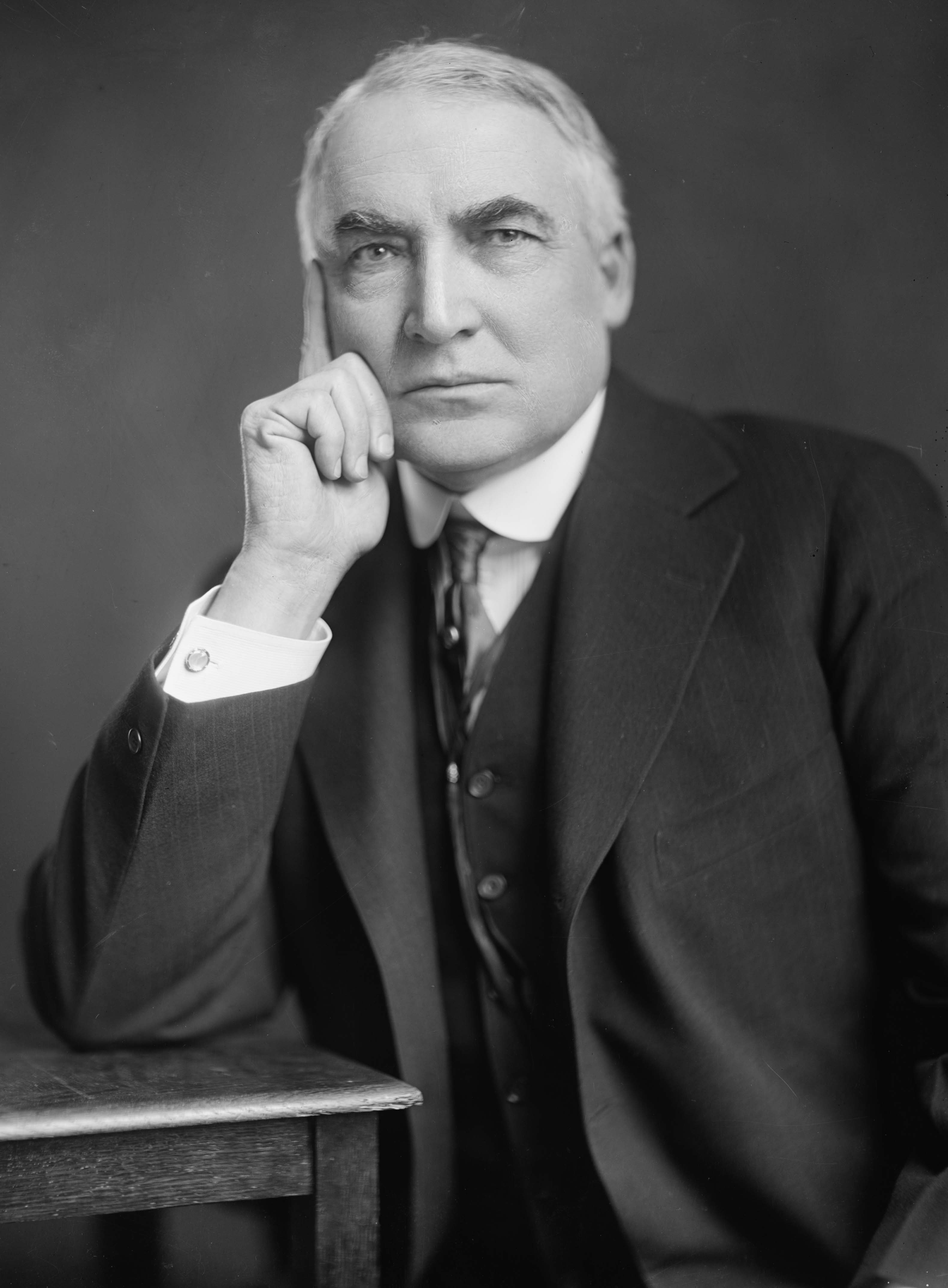
2. Despite his republican leanings, an unpopular position during and immediately following the first world war, Warren Harding, former teacher and newspaper baron began his ill-fated Prime Ministership in 1920 with 61% of the vote, which was at the time the largest ever margin in a national election, on the back of policies of isolationism and nationalism (and helped by an insider’s knowledge of the press). His government reduced post-war unemployment by 10% and established good relationships with many countries (with a distinct pro-American stance), but Harding died suddenly in 1923, and in the wake of his death came allegations of corruption and bribery amongst his cabinet that shook the establishment and resulted in his lasting unpopularity even into the present day.


3. Universally loved in the North and universally infamous in the rest of the country, Joh Bjelke-Petersen was Premier of Queensland from 1968 to 1987 before his incredible “Joh for Canberra” campaign in 1987. His government promoted huge industrial growth, particularly in Bjelke-Petersen’s home state, and was later found to have accepted large bribes in return for government contracts for a number of projects. When Bjelke-Petersen was prosecuted for perjury in 1993, the jury was deadlocked, though allegations of jury tampering were rife. When Joh was knighted, his wife (a sitting federal Senator famous for her pumpkin scone recipe) became the Senator Lady Bjelke-Petersen, which I find inherently funny. (What do you think, Aviatrix? Would “Senatrix” be appropriate in that situation just to prevent the horrible dual title “Senator Lady”?)


4. In a life straight out of a Broadway musical, John Gorton was born the illegitimate son of 'Alice Sinn' in 1911, travelled to England an graduated from Oxford in 1932, was shot down over Singapore at had his face crushed when he crash-landed upside-down in 1942, became a Liberal Minister in 1958, resigned in 1968 to contest Harold Holt's newly vacant seat, and became Prime Minister 20 days later. He was PM for less than a year before losing an election, being sacked by his own party and replaced by Malcolm Fraser. He remained an MP until 1975, and reportedly detesting being in the same room as Fraser until he died in 2002.


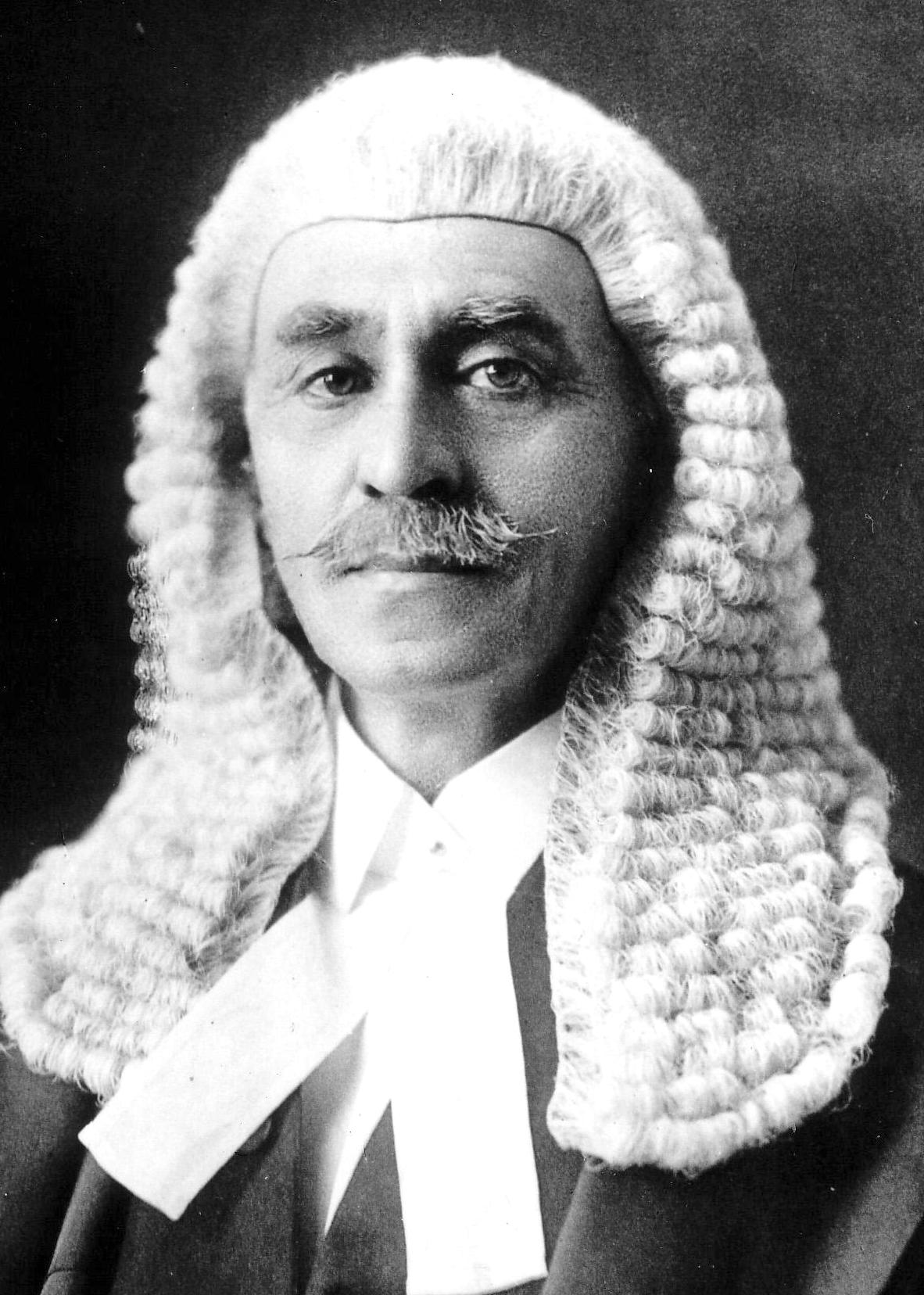
5. The first Prime Minister to be born in Australia, Isaac Isaacs sat in the first parliament in 1901 as a minister in the Barton government, but his perceived aloofness and unpopularity amongst his fellow politicians meant it would be a long time before he took over as Prime Minister thanks to the support of Labor heavyweight James Scullin in 1930, when Isaacs was already 75 years old. After leaving office in 1936 after a wave of support for Joseph Lyons’ United Australia party, he continued public life as a prominent constitutional law expert and a leader of the Jewish community in Australia. Isaacs was an outspoken opponent of Zionism until he died in 1949, and never saw Israel become a sovereign nation.


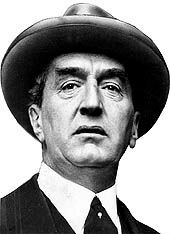
6. After studying at Cambridge and practicing law in London, Stanley Bruce joined the British Army and won the Military Cross and Crois de Guerre for his actions in France during WWI. After being injured in 1917 he travelled to Australia and was elected to parliament in 1918 and appointed Treasurer in 1921. He became Prime Minister of a coalition government with the Country Party in 1923, the first PM not to have been a member of the first parliament in 1901. A strong advocate of the White Australia policy and monarchist, he led the Nationalist Party until his defeat and loss of his parliamentary seat in 1929, a feat not to be repeated until John Howard also lost his seat of Bennelong in 2007. He helped found the United Australia party in 1931 (rumour has it that it would have been the ‘Bruce Party’ but Joseph Lyons switched the name at the last minute).


7. Born in England in 1865, George Windsor served in the Royal Navy before travelling to Australia in 1901, and rose quickly to preside over the first majority government in 1910. Despite his high popularity his leadership was marked by his declining health and Joseph Cook rose to PM after just over two years, but his tenure included many reforms of parliamentary process, international relations and vast restrictions of the power of the European aristocracy. A strong and outspoken monarchist, he played an essential role in the establishment of the Statute of Westminster (he would later be played by David Troughton in the award-winning Australian TV series, All the Kings Men) and he retained a strong political influence behind the scenes during WWI and right up until his death in 1936.


8. Joe Clark, who also began his professional life as a journalist, was prime minister for only 9 months in 1979-1980. Sandwiched between two extended Liberal party terms, his government was defeated in a no-confidence motion in early 1980, ending the leadership of Clark, still the youngest-ever PM in any Commonwealth country. A repeat-offending politician, Clark returned to politics running for and winning the seat of Kings-Hants as a “Progressive Conservative” candidate in 1998 and holding it until as recently as 2003. He currently lives in Canada since being assaulted in the street after admitting to being a former prime-minister.


9. A keen debater with a vicious sense of humour, George Reid was a Scottish immigrant who became the first opposition leader and eventually prime minister as head of the ill-fated "Free Trade" party, and practiced privately as a lawyer the whole time to supplement his income. In between, he resigned his seat in Sydney, then won in back in the subsequent by-election as a kind of private referendum on his system of equal voting electorates. After the free-trade party lost power (they instituted trade tarriffs, which gave them little support from their voting base) in 1905 he re-named it the "Anti-socialist party", and remained at its head until the formation of the Commonwealth Liberals. He resigned again in 1909, and his seat was left empty until the 1910 election (possibly to prevent him standing and winning at a by-election yet again).


10. A consummate politician, Andrew Peacock became president of the young liberals in 1962 and president of the Liberal Party of Victoria in 1965 before inheriting the seat of Kooyong from Sir Robert Menzies in 1966. As Minister for Territories in 1972 he played a crucial role in the establishment of Papua New Guinea as an independent nation, but he became infamous for his affairs (particularly his relationship with Shirley MacLaine) as Minister of Foreign Affairs (hurr hurr) under Malcolm Fraser, which may well have contributed to his surprisingly high vote in the 1984 election against Bob Hawke. His government was unable to pass much legislation due to an opposition Senate. It couldn’t last, and after a long series of in-fights leading up to and following Hawke’s 1987 landslide the Liberal leadership would change from Peacock, to John Howard, back to Peacock, to John Hewson, to Alexander Downer and finally back to John Howard in 1995. Peacock retired from politics in 1994 and became Ambassador to the US in 1996.


11. One of only two state Premiers to become PM, Joseph Lyons left state politics to enter the federal arena, then quit the sitting Labor government in 1931 and joined with the nationalist party to form the United Australia party and become leader of the opposition. He became PM in 1932 (the 3rd ex-Labor MP to become PM in another party). His government supported the League of Nations and was extremely pro-British interest, and Lyons was a successful leader, leading the UAP to three election victories. However, as the situation in Europe worsened in the late 20's, Lyons, a pacifist, died of a heart attack (the two may not have been related, who knows?). His widow, Dame Enid Lyons, became Australia's first woman MP in 1943 and served in the Menzies ministry, and both his sons would go on to serve as ministers in Tasmanian parliaments.


12. Last but certainly not least, when Gough Whitlam became leader of the Labor party in 1967, Labor hadn't been in power since Ben Chifley's popular wartime government was voted out in 1949. Labor finally returned to power in 1972, in an election campaign in which Whitlam was told to stop humiliating his opponents, as the population was feeling sorry for them, but they, fatefully, failed to secure a majority in the Senate. In the first few weeks of his government, Whitlam used the power of the Defence Minister to exempt people from conscription to exempt all Australians, opened diplomatic relations with China (and close them with Taiwan), removed tax on contraceptives, placed sanctions on South Africa and Rhodesia and recalled all troops from Vietnam. He was famously removed from office in 1975 by the Governor-General and replaced by Malcolm Fraser when the Senate failed to support his supply bills, causing a constitutional crisis unparalleled in Commonwealth history.

Please leave your answers and domestic policy recommendations in the comments.

Tuesday, 7 September 2010

Half an hour

Then we will know...

...And now we know. Australia has re-elected Labor in a minority government, supported by the Greens and 3 independents. I, for one, welcome our new Labor overlords, and would like to remind them that as a constituent in a marginal seat I could play a key part in defeating them for re-election in three years, or howsoever as long as they manage to hold on to their tenuous hold on power, should they choose to displease me.

Switch to movie announcer voice:

This spring, one woman is given three years to change the world. Can she bring together the most ragtag bunch of misfits ever seen in Australian politics to deliver stable and effective government?
The stakes are high. The budget is higher.
ALP pictures presents an all-star cast of Julia Gillard...Wayne Swan...Tony Windsor...Kevin Rudd....Rob Oakeshott...and introducing Adam Bandt, in...MINORITY GOVERNMENT. Coming soon to a country near YOU!

Monday, 6 September 2010

Elections - The Never Ending Story

More than two weeks have passed since the 2010 Federal election, and Australia is still without a government, with three of those independents we talked about last week (Bob Katter, Tony Windsor and Rob Oakeshott) still deliberating, while Bandt and Wilkie have thrown their votes behind a Labor Government, making the scoreline 74-73 against the Coalition.

Yes, that's right, after two weeks, anyone could win. Or no-one could. If these 3 guys can't come to an agreement in the next few days, Australia is in for political turmoil and all-round crazy time. Here's how it works.

If the big three come down on the side of the government, Labor will have a 77-73 majority (Tony Crook of the nationals is still insisting he's a party in his own right, but no-one is really listening). Who knows what Labor would have to offer Bob Katter and Tony Windsor to make this happen, but if they could it would make the most stable possible option.

If the 3 go to the Coalition, they could form government, but it's possible that Crook could come into play and block the election of a Speaker. Without a Speaker there's no House, and no government, so that's a pretty drastic move on his behalf. If he doesn't cross the floor, then the Coalition will come into power with a friendly Senate (until July), but only need to lose one vote in the House to block their legislation.

If the 3 split, with Oakeshott to Labor and the other two to the Liberals, we'd be in a bit of a pickle. With 75 apiece it's possible that either side could still form government, but it would rely on a lot of wheeling and dealing in each and every vote for the government to get anything done. It could be a weird time to be in federal politics.

Anyway, if you care at all you know all this, so I'll get to the point. The main reason for this post is that with 80% of the vote counted, it looks like Bob Day might make the Senate in South Australia. It's no sure thing yet, but if he gets in (with only 4% primary vote) I will feel justified for my wild predictions of three weeks ago, and you will have to bow down and pay homage to me as the Election King.

I hope to be able to write tomorrow sometime that we have a government.

Tuesday, 24 August 2010

Federal Election - Let's Make a Deal

Well, 5 days later and Australia still doesn't have a government. I feel a little bit like I'm living in a little Central American country like Coregos, except of course that I have fresh water to put in my tea, a public health system and electricity except during thunderstorms. The national stock exchange continues to plummet with uncertainty - you'd think that economists would be used to not knowing what was coming next - and in Canberra the major parties continue to wine and dine the newly elected Independents and Green MP in the hope of convincing them that they're the lesser of two evils.

Apologies, gentle reader, for involving you in the mess that is the Australian federal election, but this could be a real watershed moment in Australian politics, sparking parlimentary reform and a mix-up of the Australian party system thats been is virtual stasis since the formation of the Coalition in 1920's. Or it could be the pre-season before more of the same, but we can always hope. Thus, it's time for a refresher course in the Westminster Parlimentary system as practiced in Australia at a national level.

First, the situation. To form government, a prospective prime-minister must be able to count 76 of the 150 Members of the House of Representatives - MP's (I am aware that many consider the apostrophe there incorrect, but I think it looks nicer, so it's staying) - as support, or we go back to polls and try again. At the moment, the conservative Coalition of the Liberal, National, Liberal-National and Country Liberal parties - original names, huh? - led by Tony Abbott looks like it will end up with 73 seats and the current small-l-liberal Labor government led by Prime Minister Julia Gillard looks like getting 72, with 3 of those seats still in doubt, and the remainder of the parliament filled out by 3 conservative Independents from Queensland and New South Wales, one liberal Independent from Tasmania, and one Green from Victoria. With all the elected MPs trying to avoid another election immediately - they want to keep their jobs, after all - it would seem to be up to these 5 players as to who gets the top job in the country and who has to settle for leadership of the opposition - and probably try to fend off a leadership challenge, for good measure - .

However, all is not well in the Coalition camp, with the new National party member from Western Australia entering the fray and annoucing that he would not automatically vote with the Coalition, but would sit on the cross-benches and support whichever party would give WA a better deal. He can do this because the WA Nationals are actually a seperate party to the national Nationals, but also because the Coalition has a long-standing tradition - admittedly little seen in recent years - of allowing its members to cross the floor and vote against them if they desire. The Labor party is more likely to throw you out if you try it on them.

So at the end of an election thats been more of a media circus than a referedum about the issues, it fits that we have 6 relative unknowns who will vie against each other for power to determine who runs the country for the next up-to-3 years. I'm your host for this evening, and it's time to Make a Deal. First, let's meet our contestants.


Bob Katter - Independent for Kennedy (QLD)
The man who famously once said he would "walk backwards from Bourke" if there were any homosexuals in Charters Towers, Mr. Katter is a former Nationals MP - when asked why he left the Nats he recently replied "You got about two hours?" - who likes
ethanol fuel, Joh Bjelke-Petersen and the Australian way of life and dislikes privitisation, foreign imports, computers, and all the major parties. He's been in state and then federal seats since the mid-70's, so he knows how it's done. He wants broadband internet in the bush but doesn't want it privatised - which supports Labor policy -, and can be expected to oppose any Emissions trading scheme - Colation policy -.


Tony Windsor - Independent for New England (NSW)
Dumped from the National Party for a driving offence just before pre-selection for the state election in 1991 - he referred to that and his concurrent giving up of smoking as "rid[ding himself] of two cancers" - , Tony has been a state and then Federal member ever since, and was part of the balance of power in the hung NSW parliaments in the 90's, so he's no stranger to this sort of situation. Dedicated to climate change and improving internet speeds in the bush, he could swing either way, and some commentators have suggested that he will... in exchange for the coveted position as Speaker of the House.


Rob Oakeshott - Independent for Lyne (NSW)
Yet another former Nationals state MP, Mr. Oakeshott has held Lyne as an independent since 2008, when he won in each and every voting booth in the electorate. He says establishing an emissions trading scheme is his big issue, and has made waves with his suggestions that, instead of -or as well as - focusing on the independent MP's, Coalition or Labor MP's like former leaders Kevin Rudd and Malcolm Turnbull should cross the floor and support the other side to form government instead of leaving a government with only a thin majority of 76 seats. This sort of thing has happened in state parliaments before, but if such a situation could occur nationally, it could change the political landscape in Australia for the short-term, if not for longer, causing party loyalties to be challenged and encouraging more members to cross the floor and vote against their own party, an extremely rare occurence in modern federal parliaments. He's not the only person suggesting some unusual stuff, but he may have started a trend.


Andrew Wilkie - Independent for Denison (TAS) Coming from the Labor stronghold of Denison - held by Labor since 1987 - Mr. Wilkie is an ex-intelligence operative who first shot to fame as a whistleblower speaking out against the Iraq war. He ran for the Greens in the home Electorate of then-PM John Howard in 2004, but was once a young Liberal, and says he has no strong ties to either party but is rather "a new breed of political activist". That said, his policies would seem much more at home in a Labor government.


Adam Bandt - Green for Melbourne (VIC)
Representing the other of the two safe, safe Labor seats - Melbourne has been held by Labor since 1904 - that have been poached by the left in this election, Mr. Bandt likes the Green party and presumably all their policies and can be expected to side with a Labor government - or at least be sure of not siding with the Coalition - but his support in every vote is by no means a sure thing.


So, these six contestants hold the fate of the nation in their hands, the greatest power any individual MPs have held in parliament in half a century, let's show them what they've won...

Monday, 23 August 2010

Senate Elections 2010 - Bump Out

As I write this, the federal election is still up in the air and likely to stay that way for a while, with neither of the major parties being able to form a majority government, and Australia looks certain to be ruled by its first minority government since Menzies' disasterous WWII United Australia Party colation with two independents that then abandoned the government and put the Labor party in power. While we wait to see which of the major parties can successfully negotiate with the three (possibly four) independents and single green in the lower house to form government, let's go look at the provisional results in the Senate, and see just how off-the-mark last weeks predictions actually were...

In my home state of South Australia, the Greens fell just short of being elected in their own right with 13% of the primary vote, but got over the line on Sex Party preferences (the Sex Party, in a sad reflection of Australians current opinion on mainstream politicians, got a massive 1.7% of the primary vote and came 5th overall). Family First got within half a percentage point of stealing last Senate seat from the liberals after preferences, but failed to get as much primary vote as I anticipated (though they got more than I hoped), and so fell just short. Thus, SA has returned 2 Labor Senators (goodbye to current Senator Wortley), 3 Liberals and 1 Green. Am I the only one who thinks it would be fun to return to conventional latin language roots and call female Senators Senatrices?

Nationally, the Greens did well at the expense of the major parties (the Coalition lost three seats and the ALP lost one), taking a Senate seat in every state, and the Liberals managed to just scrape through on the primary vote in the ACT to keep them out there. The other party to win out was the DLP, who overcame a highly-publicised potential split, almost nonexistant finances and finally my scathing commentary of their chances compared to Family First to oust the sitting Family First member Stephen Fielding and elect the DLP's first Senator since 1974.

Generally, it was an election for records. Not only did we see 20-year-old Wyatt Roy elected as our youngest ever parlimentarian for the Liberals in Longman in Queensland, we saw our first ever Muslim MP in Ed Husic for Labor in Chifley in NSW, our first ever Indigenous MP in Ken Wyatt for the Liberals in Hasluck in WA, the Greens took their first ever seat in the electorate of Melbourne, it's our second-ever hung parliament, possibly our closest-ever election, and the aforementioned re-election of the DLP to the senate after a 30-year absence.

Labor=Red, Greens=Green, Xenophon=Grey, DLP=Vomit, Blue=Coalition in the worlds uglist graphic (if you know how to make it less small without it pixellating up the whoopsie, please let me know)

This result means that, as expected, the Greens hold the balance of power in the Senate, and the major parties will need either the support of each other or of the Greens to pass any legislation, whichever party ends up forming government is undoubtedly going to have quite a fight on their hands. We'll have to wait and see if the Australian people are the winner or the loser in this arrangement.

In conclusion, I am a pretty good predictor, I just wish that I was female so that I could be a predictrix.

Monday, 9 August 2010

Senate Elections 2010

It's that time again, when my mailbox overflows with advertising from political parties eager to win my vote on the issues they think matter to me. Because I have a reputation to upload as a tremedous bore, in this post I'm going to try and sort out where my votes will be going on August 21st using an awful lot of words and no pretty pictures at all. I'm going to do a bit of a dive into the much neglected Senate, focusing entirely on my home state of SA, which is the only place I have to vote, thankfully. If you disagree with any of my summaries of the parties in this post (I have a tendency to be flippant), feel free to let me know.

If you're reading this, I'm going to assume that you're from the US, since everyone on the internet is from the US. Why you'd be reading this is another question, but I don't really mind, I'm pretty good at talking to myself anyway. This means I'm going to spend some time explaining the political system as a whole before I get into the nitty-gritty of individual candidates. Feel free to skip to the good stuff if you're already familiar with this (or to correct me when I'm horribly wrong, sometimes I'm just wrong, and sometimes I'm over-simplifying for the masses).

So the US Senate has 2 senators from each state, so that each state is represented equally. This is designed to protect the smaller states from legislation that would disadvantage them being forced through by more numerous states who have more seats in the Congress. When Australia federated at the turn of last century we thought that that was a pretty good idea, so we copied it (these days we'd probably get sued for copyright theft or something, but it was a simpler age). We upped the number per state to six, as we decided that 12 guys in a room having that much power was a little bit silly, and bam, parlimentary checks and balances and state equality was ensured. Unfortunately, this didn't work quite as well as it does in the US, as members vote on party lines, without the freedoms (and many of the problems) of the US system, but that's a conversation for another day.

These days, there's 12 Senators for each state, and two for each for the Northern Territory (who also represent the overseas territories) and the ACT (Australia's District of Columbia) (who also represent the other mainland territory). Each election, each state votes in 6 of those senators for a 6 year term (equivalent to two three-year federal election periods), so like the US system there's continuity, and the Senate lags behind popular opinion by a considerable margin. The territories do it differently, and although the ACT elections are interesting in their own right, that's not up for discussion today either.

Senators are voted in using a preferential single transferable vote system. A constituent (voting is compulsory in Australia, and every registered voter may be fined for not at least turning up on polling day) votes either for a party, and accepts their preference choices (this is called above-the-line voting), or allocates an order of preference that includes each and every candidate (below-the-line voting). Any candidate that receives 14.3% of the first-preference vote is instantly elected, and over quota votes are distributed to the second-preference candidate (often another member of the same party). Then parties with the lowest numbers of votes are eliminated and their votes allocated to the next preferred candidate, etc. until all 6 seats have been filled. This means the preferences of each party as to who receives their votes
is of vital importance as to who eventually wins the available seats.

Anyway, that means the people of South Australia have to elect 6 people to the Senate on the 21st of August, and those people will be our voice in Canberra for the next 6 years. When we elected the currently retiring group of Senators, the major third party in Australian politics, the Democrats, who'd held at least one SA seat in the Senate at every election since the late seventies (and whose campaign slogan was "Keep the Bastards Honest", an interesting look into the Australian psyche) had recently ripped itself apart, and at the time none of the other parties were a viable option to South Australians. As a result, the major parties, the centre-left Labor party and the centre-right Liberal party, were able to snare the seats left behind in the third-party vacuum, electing three members each and forming a Senate that was extremely light on in terms of opposition to the major parties (who're increasingly seen, in a perfect real-life example of the ice-cream vendor problem, as two sides to the same coin).

The political scene is very different now. Aside from the Labor party regaining power after 13 years of Coalition government led by "Honest" John Howard, we've seen the rise of the leftist Green party as the preferred third party, and the rise of the religious right in the form of the Family First party, who currently hold 5 and 1 senate seat respectively. Also, of the 6 Senators elected 6 years ago, 4 are retiring or have already retired, including 3 high-profile Howard government ministers, so South Australians are faced with a swathe of relative unknowns representing the major parties. The last senate election in 2007 saw both the Greens and hugely popular former-state independent Nick Xenophon take votes (and seats) from the major parties, as South Australians become increasingly unimpressed with both Labor and the Liberals. Xenophon polled 15% of the primary vote, so where those who voted for Xenophon last time around will be voting this time (with Nick very quiet about his preferred candidate) is anyone's guess (both the Greens and Family First are trying hard to ensure a good percentage flows to them).

If the Greens and/or Family First do manage to pick up a good percentage of the voters who supported Xenophon, then they've got a good chance of picking up the last 2 seats. The major parties always poll above 2 quotas each, so the first four seats are shoe-ins, what matters is if the Greens and Family First can gather more after-preference votes the the third candidate from the Labor and Liberal parties respectively. If they can, then the preferences from the Labor candidates will almost certainly elect a Green Senator, and the preferences from the Liberals will almost certainly elect Family First. The way the preferences are set-up, there's almost no chance of either the left (Labor and Greens) or the right (Liberal and Family First) picking up more than 3 seats each without a huge swing that seems unlikely with 2 weeks to go, it's just a matter of which Party will take the seats.

With the stage set, lets meet the candidates:

These are in the order that they will appear on the ballot papers, as well as info about the candidates and party policies I've added a little about their chances and past results, as well as where their above-the-line preferences will flow assuming that only the big four parties are left at the crunch (which seems very likely unless the Democrats get a crazy lucky revival).


Group A: The Climate Skeptics.
After preference vote: Family First.

First out of the gate is father and son team Leon and Nathan Ashby, running for the Climate Skeptics, who're also running a number of candidates in House of Representatives electorates across the state. Most notable for their opposition to any kind of (carbon) Emission Trading Scheme, they have a range of other policies detailed in this powerpoint presentation, which is a great idea I'd like to see more parties take up, but not excellently executed. Nathan ran for the State Legislative Council earlier in the year and managed a very respectable 0.63% of the primary vote.

Being climate skeptics, they want an immediate end to any government legislation based on CO2 emissions or climate change until more than 5 independent scientists (that bit's a bit vague), instead, they want environment funding to focus on establishing a national water infrastructure, capturing more water in dams, pumping and storing it in the far north of the country, building desalination plants and water treatment and recycling (mere mention of which is voter poison in SA for now, despite some council areas already utilising it).Interestingly, they're also behind alternative energy, due to the shortage of fossil fuels, not the perceived climate issues, which makes them different to many pro-oil-company positions we've seen in the past. They're not just a single-issue party, either, they've also got a range of other policies including greater individual property rights, lesser government powers, incentives for self-funded retirees, limits on campaign advertising, more support for the unemployed, and more funding for better broadband internet
A couple of big issues they're also behind include cloud seeding, leasing of national parks to corporations, the building of more cities and the infrastructure to support them.

Bonus points for: Not actually sounding rabid, like most climate change skeptics I'd met.
Marked down for: Wanting more checks and balances, but less red tape. They both sound great, but you should probably pick just one.


Group B: Independent.
After preference vote: Family First.

Mark Aldridge and Christopher Cochrane are running on a joint independent ticket. I can't find any information about Christopher Cochrane, so I'm going go right ahead and tar him with the same brush as Mark Aldridge (if you know different, please let me know and I'll update this info). Aldridge ran for the SA Legislative Council earlier in the year (he got 0.13% of first preferences) with the byline "Change Is Necessary", and boy does he want to change a lot of stuff, a short but impressive list of his policies is available on his homepage, and is well worth a look, but one is struck by huge amount of changes he'd like to make with a lesser government income.

Bonus Points For: Having an accessible and attractive website.
Marked down for: Sounding rabid enough for everyone.


Group C: Labor.
After preference vote: Themselves, then the Greens.

The Labor party (it was named back in the dark ages of last century when modernised spelling was all the rage) is in a pretty good state going into this election, with a relatively popular state Labor government and two currently sitting Senators applying for re-election. They may have banked on this somewhat by putting union boss Alex Gallacher as their number one preference above sitting senators Anne McEwen and Dana Wortley, or perhaps the Hon. Ms. Wortley has annoyed the party in some way, as she'll be the one who might not get re-elected if the Greens somehow manage to beat her over the line for one of the two seats up for grabs once Labor and the Liberals have scarfed two each.

It seems that every day that this election period goes on people become less and less impressed with the policies of the major parties, who seem to be focusing more on slurring their opponents and accusing them of the crime of 'playing politics' than actually making any promises that might win them the election. Both parties have a range of policies which generally differ from their opponents by only a small margin, but with policy mostly off the table as an issue, and no-name candidates in the Senate, the voters are going to be deciding based mainly on the perceived trustworthiness of the respective party leaders, new Prime Minister Julia Gillard, who unseated the previous PM earlier in the year, and Tony Abbott, apparent victor of three years of intra-party bickering in the Liberal camp.

If you are interested in policy and have been living in a box or another country for the last...50 years. Labor is for higher taxes and a greater range of government-delivered service, while the Liberals favour relying on corporations and private groups to deliver services and lower taxes. These differences are most noticable with Labor's announcement of a Super-profits tax, a high-percentage tax of profits above a certain level for big mining corporations, in order to pay for a range of environmental and social issues, and the parties competing internet policies, the Liberals want 6 billion to improve the current broadband network in regional areas usign wireless means and Labor wants 42 billion to provide cable broadband to the home, dramatically increasing Australia's internet capability. Labor is for federalising the health and education systems (in fact they've already started) and cutting state revenue, and the Liberals are for individual state education and health programs. These sort of differences will be familiar to any US readers, not that I've fooled myself into thinking this "trenchant" post has any readers at all.

Bonus Points For: Having been pretty productive in government after 13 years in opposition.
Marked down for: Having stuffed up a lot of their productivity.


Group D: Liberal
After preference vote: Themselves, then Family First.

The Liberal party (since they're generally right wing we use the exceptionally ugly terms small-l-iberal and big-L-iberal to tell the difference) are running completely different candidates to those that they ran six years ago, with Amanda Vanstone currently our Ambassador to Italy and Alan Ferguson and Nick Minchin retiring when their terms come to an end. In their place, we have Sen. Mary Jo Fisher, who took Ms. Vanstone's seat when she resigned mid-term, state Liberal party president Sean Edwards, former lower house member David Fawcett, and in an ambitious bid for a fourth seat for the liberals, Peter Salu, who also ran unsuccessfully for the state Legislative Council earlier in the year.

The Liberals find themselves in a similar boat to Labor, hoping to hold onto their three seats against assaults from what has traditionally been their safe right flank in the form of the Family First Party. Facing a big turnover of leadership since the last election, opposing the first female PM in Australian history and still struggling under their fourth leader in as many years, the Liberals should still claw back some ground from the landslide that was their 2007 defeat.

On the policy front: see the Labor post for the big differences.

Bonus Points For: Tony Abbott is a very attractive, witty man.
Marked down for: Ridiculous amounts of negative ads during the campaign.


Group E: One Nation
After preference vote: Family First.

One Nation, a nationalist party that campaign "to protect and nurture our sovereignty and national pride", have been pretty quiet this election after getting on (0.6%) last time around. Robert Edmonds and Peter Fitzpatrick are running in SA, on removal of international trade agreements and tightening of border security.

Bonus Points For: Still trying even though the party is a spent force and national laughing stock. (Sorry, up until then I managed to stay reasonably fair and unbiased, I thought)
Marked down for: Sounding a little bit like the borg with a policy of 'Scrap "Multiculturalism" and require all immigrants to assimilate as Australians'.


Group F: Democratic Labor Party
After preference vote: Family First.

The Democratic Labor Party have been around in Australian politics for a long time, being the descendant of the original DLP which split from the ALP proper in the 1950's and has been drifting slowly to the right ever since. They've traditionally had a good percentage in rural areas and polled almost 1% in 2007, so Paul Russell and David McCabe are onto a pretty good thing. The only reason the DLP doesn't do as well as it used to running on a platform of pro-life, anti-euthanasia, anti-same-sex-marriage social justice platform are the presence of two higher profile parties in One Nation and Family First muscling in on their turf. In fact, the DLP outpolled Family First in Victoria at the last election when Family First Senator Stephen Fielding was elected, but the DLP failed to get enough preferences to get over the line.

The Democratic Labor Party shares most of its policies with the Family First party, but is lower profile. They've obvoiusly put a lot of thought into their policies and have gone to a bit of detail, which is more than I can say for family first, who seem to have tried to avoid making policy statements on as many areas as possible. A vote for either party is going to go to family first anyway, as the DLP just doesn't have a high enough profile to get the votes, and Family First has again outmanouvered them with preference deals with the other minor parties.

Bonus Points For: Having defined policies and sticking by them
Marked down for: Not having merged with Family First yet


Group G: Christian Democratic Party
After preference vote: Family First.

Joseph Stephen and Frank Revink are running for the super-conservative Christian Democratic Party, who line up with the other right-wing parties on issues like abortion, euthanasia, childrens rights and the like, but are more militantly Christian. Their main distinguishing feature is their policy on Islam, they'd like Islamic immigration banned and like Australian muslims to speak out against Sharia law, terrorism and closed communities. The CDP is a force in regional areas in New South Wales and in Western Sydney, but failed to even reach .2 percent of the vote in SA at the last election.

Bonus Points For: Being vocal in what they believe, and keeping their issues alive in the political arena. That's the whole point of minor parties.
Marked down for: Attempting to stop Muslim immigration, which is borderline unconstitutional and just plain rude.


Group H: Carers Alliance
After preference vote: Liberal or Labor.

The Carers Alliance are contesting their first SA senate seat, possibly inspired by Dignity for Disabled's come from behind win in the state Legislative Council earlier in the year. Campaigning for more support for the disabled and their carers in health and education and more rights for the disabled, Garry Connor and Angela Groves could conceivably pick up a good percentage, although they've had a lot less media than Dignity for Disabled did in the state election (they're both alive, for starters). An issue party, they've split their preferences half-half between the two major parties so they should balance each other out rather than giving an advantage to either side of politics, neither of which the Carers Alliance is doing for carers and the diabled, and are campaigning more for awareness.

Bonus Points For: Not picking a side in the federal election.
Marked down for: Not picking a side in the federal election.


Group I: Senator On-Line
After preference vote: Family First.

Simon Lang and Jamie Dawson don't have any policies, they have ideals. Senator On-Line pledge to put each and every Senate vote up on their website, to vote whichever way the majority of voters (or voters who log on to their website, anyway) want, and to abstain from every vote that doesn't get a 70% majority. I don't know how many things a senator has to vote on, but I imagine the website would get a lot of traffic if there was polls for every single vote.

There's not really anything more to say on the party, except that I saw a guy get elected to the Adelaide University SRC using this method last year, and the idea was a spectacular failure, but it can only work better in forum where people might conceivably actually care about the issues, like the federal Senate. They plan to check 'voters' agaisnt the electoral roll, which seems like a tricky thing to do in practice, but if it could work I do think they need to revise their policy so that only people in the state the senator represents can vote, as a senator represents their state or territory, not the nation as a whole.

Bonus Points For: Actually having no policies, rather than just having a lot of fluff that amounts to the same thing.
Marked down for: Dragging the democratic process through the mud.


Group J: The Greens
After preference vote: Themselves, then Labor.

The Greens have tried hard this election campaign to portray themselves as the viable 3rd party, banking hard on their holding the balance of power in the Senate to force the major parties to sit sit and be held accountable for their actions. It's a sign of their changed fortunes that leader Bob Brown participated in the national leaders debate, and if Senate hopefuls Penny Wright, Sandy Montgomery and Jeremy Miller make it past to post, it will be because of the Greens standing as the new third party in Australian politics, not its environmental policies. As if to demonstrate this, Penny Wright, the only Green candidate with any chance of being elected in SA, is not a noted environmentalist, but has been a campaigner for a variety of social issues in SA for a while.

The Greens major policies include more compassionate attitude towards asylum seekers and illegal immigrants, more foreign aid in the Asia-Pacific, improving public transport and increased investment in the arts, as well as a swathe of ambitious environmental projects, such as moving toward 100% renewable energy for Australia, dramatically reducing flood-irrigation, developing a carbon-trading scheme and developing alternative energies. The greens are now far from a single-issue party, and their greatest opposition comes from the more conservative christian voters and political parties, who've been dumping a lot of negative advertising their way for their support of high-profile issues like same-sex marriage, euthanasia, and their pro-choice stance.

If you think that you can tell a lot about a party by seeing whose preferences flow to it, the Greens are picking up preferences only from the left-fringe parties Socialist Alliance, Australian Sex Party and Secular Party of Australia, another fact that's bound to endear them to the vocal Christian groups in the state.

Bonus points for: Running a comparatively positive, issues-based campaign, with only a little bit of fear-mongering.
Marked down for: Abandoning their traditional re-useable generic posters in favour of candidate-specific advertising material, even if it is recyclable.


Group K: Building Australia
After preference vote: Family First.

Bill Adams and Neil Jackson are the candidates for the brand-new Building Australia party, who are made up of representatives of the building industry and are campaigning mostly on a platform of lower house prices via a range of government and building industry reforms and deregulation. I hadn't even heard of them until I started researching for this election, and given their current limited policy scope, I'm not suprised.

Bonus points for: A simple, functional, straightforward website of the no-nonsense kind you'd expect from an architect.
Marked down for: Limited vision, appealing to other small business owners would seem to be the next step.


Group L: Shooters and Fishers
After preference vote: Family First.

The Shooters and Fishers party are anti-green and pro-gun. I can obtain only a little information about their policies, but they seem to be mostly about hunting and fishing rights, opposing increases to conservation areas and encouraging less stringent gun and surveillance laws. Steve Larsson and Robert Borsak can expect support from agricultural and maritime areas but little urban support.

Bonus points for: Opposing gun-control, probably South Australia's biggest no-no, it takes balls to fly in the face of public opinion like that.
Marked down for: Not having anything but a news feed and forum on their website.


Group M: Australian Democrats
After preference vote: Labor

Jeanie Walker (who ran for the State Legislative Council earlier in the year with little success) and Andrew Castrique are the Democrat's hopes in this election. As we went into in the introduction (it seems like weeks ago, I know) the Democrats were a major force in federal politics a few years ago, but have now fallen back down to earth. The Democrats are still backing themselves as a viable alternative to the minor parties as well as to the Greens, emphasising their centrist credentials and willingness to compromise, even though policy-wise they're very similar social lberals. The main difference between the two is the democrats just as comitted but more practical environmental policy, showing a willingness to find the middle ground and move more gradually than the extremist Greens who have earned themselves so many enemies in their rise to prominence.

At the last federal election, the Dems snared just 0.9% of the SA primary vote, and gained about the same amount in the Legislative Assembly earlier in the year, following their last state MLC abandoning the party to run as an independent. Their failure to secure good preference deals again this year, as well as revelations that their candidate for my local seat is a convicted sex offender, will almost certainly rule them out of contention, but if the Greens were to have hugely unprecedented success (which I doubt, but it could potentially happen) they could do pretty well on Green and Labor second/third-candidate preferences.

Bonus points for: Continuing to develop comparatively thoughtful and balanced policies.
Marked down for: Not getting a shred of positive pulicity in the campaign, try harder, people.


Group N: Socialist Alliance
After preference vote: Greens.

The Socialist Alliance are one of the left wing parties that got a bad draw in their ballot location, and will be appearing a long way to the right, which could be expected to decrease what was already a pretty meagre 0.8% vote at the last federal election. Renfrey Clarke and Ruth Ratcliffe are campaigning on the ambitious party policies of 100% renewable power by 2020 (the Greens plan to develop financial plans to do this by 2030,'40 and '50), increased and free public transport, free university education and a lowering of the voting age to 16. I have no evidence to support it, but I'm going to go out on a limb and suggest that the Socialist Alliance will support this platform by taxing the bejeebers out of the rich for the good of the proletariat.

Bonus points for: Ambitious domestic and international policy.
Marked down for: Failure to describe at all where they'll get the money.


Group O: Secular Party of Australia
After preference vote: Greens.

Scott Sharrad and Moira Clarke represent the Secular Party, their servers seem to be struggling with the influx of visitors to their website, so be gentle. The secular party are another new party contesting this election, running on exactly the platform you'd expect, opposing government funding of religious schools, religious education, and religious veiws having an impact of scientific advancement, as well as the regular leftist positions on LGBT marriage, abortion, euthanasia (it seems wherever you go, people have strong views either on the positive or the negative or all of these, and I'm getting sick of mentioning them in policy lists). The secular party seem very reasoned and respectful of religious views, as much as they don't want them influencing government policy, which is more than I can say for a few of the parties on the far right.

Bonus points for: Being the most sensible-sounding of the small-l-iberal parties.
Marked down for: Undoubtedly the worst logo in the campaign.


Group P: Liberal Democrats Party
After preference vote: Family First.

Contesting their first election as the Liberal Democratic Party after starting life as the Liberty and Democracy Party, represented by Nick Kerry and Megan Clark (that 3 Clark/Clarke's in 3 consecutive groups), the LDP stands for a wide range of domestic reforms. Large taxcuts would be followed by deregulation and privatisation of transport, postal, broadcasting, insurance and power services, removal of unemployment benefits in favour of a "negative income tax" and international free trade. Also freedom for Tibet and Taiwan, not that it's really an Australian issue at all.

Bonus points for: Using the Eureka flag, Australia's most attractive historical flag.
Marked down for: Being very pro-choice and yet giving preferences to Family First. Makes me wonder if they really believe in their platform.


Group Q: Australian Sex Party
After preference vote: Greens.

Militant internet filters prevent me from learning any more about this party or linking to their website, I'd allege that it was an anti-ASP political maneuver, but it's probably saved me some valuable minutes of my life that I'd never get back. Ari Reid and Jason Virgo shot into the spotlight when the media revealed that they'd been approached for a preference deal by Family First. These guys sure know how to manage the media and the spotlight, it's just a pity that they've used it to release strings of doube-entendres with no actual policy backing instead of turning their powers to advantage one of the minor parties with actual issues. The sad thing is that simply having the word 'Sex' in their title, compulsory voting in Australia probably means they'll get more votes than many of said minor parties.

Actually, the Sex Party might have policies, but I have no way of checking. If they do, I imagine that they're to do with the legalisation of prostitution nationally, provision of healthcare and union rights for sex workers, and greater legal protection for sex industry workers, all legitimate issues in their own right.

Bonus points for: Admitting that they're joke candidates.
Marked down for: Starting a political party instead of a late-night comedy show.


Group R: Family First
After preference vote: Themselves, then the Liberals.

By a freak chance, Family First occupy their rightful place on far right of the 18-group Senate ballot paper. Family First is the high profile "Family Values" party (in case you hadn't gathered, that really means "religious" without saying it out loud), campaigning for smaller government to leave more money for families. They are capable of saying this is many different ways, it's pretty impressive, actually. Family First currently have a federal senator, and have their best chance yet of getting one here in South Australia, whose conservative base is growing with every election.

Bob Day, Andrew Cole and Thea Hennesey make up the candidates for the prominent heterosexual, pro-life party, who can be expected to pick up a greater percentage of the vote this time around in their own right and also as an anti-Green choice, but not enough to get elected without the help of a large number of preferences. Family First must have a great negotiator, as they've secured the major preferences of almost all the conservative and centrist parties, missing only those on the left (for obvious reasons), which combined with Liberal flow-on preferences could just be enough to get them over the line.

That said, the biggest thing in their favour in South Australia is undoubtedly their lead candidate, Bob Day, who is a respected community member who lacks the bigoted bearing of a number of other right-wing candidates, and is widely respected in SA as a down-to-earth thinker, ideas man and all-round nice guy. As much as voters might dislike a number of Family First policies (which they're very vague about on their website), I suspect SA would be well represented by a man of integrity if Bob Day were elected. We could certainly do worse.

Bonus points for: Ok, I'm a Bob Day fan, obviously.
Marked down for: Not disagreeing with the Liberals position on enough things, making them less of an political alternative than they might otherwise be.


Group UG: Michelle Drummond

Running only under the line, meaning to vote for her you'll have to vote under the line, in returning independent candidate Michelle Drummond. Because few people can be bothered voting below the line, and many of those that do stuff up and render their ballot informal, Michelle will likely come in last on primary vote, and will lose out on preferences as well. She's running on a platform of mostly environmental policies, but also on a non-partisan true-independent, I-don't-want-your-dirty-preferences line which one can't help but admire a little bit, even if it does make you wonder if she's really cut out for public office.

Bonus points for: A damn attractive website, seriously, check it out.
Marked down for: I'm not going to mark her down at all, she's got enough against her as it is. Best of luck to you, Michelle.


And there you go, a mere week-and-a-half after it was first posted, I've finally completed my mammoth task, which has certainly helped me decide who I'll be voting for. I'm not going to tell you who the lucky candidate or party is, but I can tell you that I'll be voting under the line, so apologies in advance (well, not that much in advance, since polling day is tomorrow) to whoever has to count my ballot. Hoorah for the democratic process, huh?

I promise that I'll try to put some pictures or something in the next post.