Wednesday, 2 August 2017

Through History with the Monday Quiz in Exile: The 1460's

The Leaflocker is currently hosting Michael5000's weekly history quiz while he takes a break from creating non-art-tournament content. I don't know if he's noticed this fact yet, but I'm not going to let a little thing like that stop me.

Some decades are so full of important events that it's hard to decide which of them to include in our weekly history quiz, and some decades are...decidedly less interesting. It's not that I think that the 1460's were boring, exactly, just that there seems to be remarkably few world-changing events going on during them. So yes, I am blaming history itself if you feel that the notable events this week seem...less notable than usual. As usual, leave your answers in the comments, and do show your workings, as it's much more fun like that.

1. 1461 is commonly given as the date of foundation by the Ottoman Empire of which city, the modern-day capital of Bosnia and Herzegovina?

2. The conclusion of the Thirteen Years War and the Second Peace of Thorn saw one of the final nails in the coffin of the Teutonic Knights, who were forced to cede control of Prussia to which state in 1466?

3. Cosimo de Medici died in 1464 after more than thirty years as de facto ruler of Florence, exerting power through use of his considerable fortune. At this point in time, Florence was officially ruled by the Signoria, a group of 9 priori selected every two months from amongst whom?

4. Having set up his Offizin, or printery, in Strasbourg earlier in the decade, in 1466, Johannes Mentelin printed the first of many bibles to be printed in the vernacular. In the decade to follow, bibles would be printed in Italian, Catalan and Czech, but what language was the Mentelin bible printed in?

5. Feeling a little short of cash in 1469, Christian I of Norway ponied up Shetland and Orkney as security against the payment of a dowry for his daughter Margaret. When he failed to pay, which Kingdom officially annexed the islands?

6. Beginning in 1467, the Ōnin war, an eleven year conflict that left Kyoto in ruins, marks the transition from the Nanboku-chō period into which era of Japanese history, a 150-year period notable marked by near-constant military conflict?

7. Invented in 1467 by Leon Battista Alberti, the polyalphabetic cipher was a step forward in cryptography as it allowed the use of wheels like the one pictured above to switch encryption alphabets during the message. Why was this such a significant advance?

8. I have a soft spot for Pope Pius II because he wrote erotica and generally messed about before ascending to the papacy. I am the proud owner of a lovely edition of his autobiography, written in the third person because he was just that cool. He died in Ancona on the Adriatic coast of modern Italy in 1464, what was he doing there?

9. The 1460's saw the rise of Tenguella as chief of the Fula people, still the largest nomadic people group in the world, and a large influence in the spread of Islam in Northern and then Western Africa. Under Tenguella, as the Empire of Grat Fulo, the Fula were again on the move, out of Senegal into which modern-day state?

10. 'Catholicons' were important books in Europe the late 15th century, and one of the more notable examples,the Catholicon Armoricum, was written in 1464 in Tréguier, Brittany, modern-day France. You still come across Catholicons all the time, though under which more common name are they now known?

Please leave your answers in the comments below. Thanks for playing and for dropping by, and I hope to see you (and to visit your blog) during Blaugust 2017.

Tuesday, 1 August 2017

And Brutus is an honourable man

As we begin Blaugust 2017 it seems only fair that we should begin on the series that has been a staple of recent years of our annual blogging festival, my seven year 'weekly' reading project that begins it's fourth year of life having only completed 17 iterations. That a blog series that has completed just 10.8% of its intended progress by this point is the flagship content around here should give you all a bit of an idea of exactly the kind of blog the Leaflocker is, just in case anyone new has just wandered in.

This 'Week':

With that inspiring introduction out of the way, let's check in with what we've been reading. This week started out as a great week for reading, with a lot of progress being made in he first few days, but then before I knew it it was Monday again and I still had Augustine and Euclid to wade through, and neither of them really lend themselves to easy reading.

Francis Bacon, Oxford Natural History Museum
Brave New World by Aldous Huxley
Chapters 17-18

There's a good smattering of quotable material in chapter 17 as the Controller and the Savage continue their discussion, climaxing in those wonderful lines 'But I don't want comfort. I want God, I want poetry, I want real danger, I want freedom, I want goodness. I want sin.'

I particularly enjoy the collisions between the idea that the conveniences of modern life make bearing suffering unnecessary and the idea that suffering itself is required in order to experience the fullness of life. Bacon touched on some similar ideas as well this week, and I've no doubt that we'll visit something approaching it later on in the project as well, something I'm looking forward to, as Aldous plot resolution stuff forced by the fact that this is a novel really gets in the way of a proper discussion. #punachieved

It's probably also worth mentioning that even though Brave New World isn't one of the books in the GBWW, the way that it takes and plays with ideas both from Shakespeare and from classical mythology mean that it fits nicely into this idea of a Great Conversation.

Confessions of Augustine of Hippo
Book X

Last week's readings in the Confessions were hard work but rewarding because they were full of rich quotes and a sense of infectious joy. This week's readings were hard work without a whole lot to redeem them. 

In this chapter, Augustine reads like the worst parts of  Plato, going back and forth over definitions of 'knowing' and 'remembering' and eventually seemingly resorting to word-trickery rather than actual logic to see him himself out of the hole that he's dug himself. I'm sure the argument was useful in the context of the heresies that Augustine found himself writing against, but I found both the arguments and the conclusions to be unconvincing. 

If it's okay with you, I'm going to keep taking pleasure from life, as I am confident we are supposed to do. I recommend that all of you do the same, don't let Augustine bring you down.

Elements by Euclid
Book VIII

I am pretty confident that I managed to more or less understand everything that was going on with the number stuff this week, I'm just not convinced that either that I care enough about this content or that I've internalised it enough to use it further if we ever get to the stage where we use all these definitions for something. I guess being a visual-type person the immediate applications of geometry just make sense to me in a way that this number theory stuff just fails to click.

When I began the project I gave myself license to drop out of reading works that I didn't feel I was getting anything out of, and after a few weeks like this I'm getting pretty close to this stage with Euclid. Still, at least we've made to half-way, right? Ugh.

Julius Caesar by William Shakespeare

Let me start by saying that on another reading Julius Caesar remains one of my very favourite pieces of Shakespeare. It's a great length for devouring in a single sitting, because there's no time wasted with entire scenes and characters just to make fart jokes. It's full of the kind of quotable lines that people use all the time, even without knowing where they come from. Best of all, it's just weird, it doesn't feel like any other play that I can think of. The title character dies halfway through, with barely a monologue. There's not any villains and not really even a protagonist. The mastery of sarcasm is so evident in the 'Friends, Romans, countrymen' speech that it drips off the page...

I really like it. If you've never seen it, make the time, at least to read it, but going to a show would be even better. You won't regret it.

Les Miserables by Victor Hugo
Book Seven, Chapters VIII-XI

It might have taken this long, but I love that Hugo has got us to such a state where he no longer has to show us inside Jean Valjeans head. The competing motivations behind every little action are clear to us. This stuff is one of the reasons that Hugo is so great. 

One of the reasons he's not that great is his tendency to use brute-force plot devices that just don't make that much sense. The whole 'everyone was so shocked that they just let him walk out of there instead of arresting his ass' plot point is almost as unlikely as the 'I'm just gonna steal this kid's coin for no reason' malarkey. Needed for the plot to advance, but frustratingly unrealistic.

Of Adversity by Francis Bacon

Someone like Bacon, who takes a point from classical philosophy and expands on it in his 'modern' context fits so nicely into this 'Great Conversation' idea, and in fact the central point here linked nicely back into Brave New World this week, so this reading ties the whole week together quite nicely. I'm a little unsettled by his implication that virtues are only available to Christians, but I guess I'm willing to overlook it for the phrase 'Prosperity is the blessing of the Old Testament; adversity is the blessing of the New; which carrieth the greater benediction, and the clearer revelation of God’s favor.'


Moral of the story, when you write history, write for a future audience and seek to be as truthful and unbiased as possible while still being interesting. But that doesn't really convey how much this one was just a hoot.

Lucian's withering wit is really a lot of fun to read, and I look forward to finding out if there's anything more to be read as part of the project. If not, I might just have to supplement it with a couple more choice pieces from Lucian, who seems to have his head screwed on tightly, even if it seems that he'd rather insult people for trying rather than actually doing any better himself. 

The Stats:

Few notable milestones were reached during this week. We passed 300 pages of philosophy and theology and 200 pages of texts translated from Latin on the back of Augustine, but that's about it. We sit at 999 pages of novels read, though, so next week we're sure to have something to celebrate.

Pages last week: 119
Pages so far: 1975

Week XVIII:

As we say goodbye to Brave New World, it's time to pick ourselves up some other longer-term reads. Doctor J's reading plan suggests Robinson Crusoe, so we'll grab that, as well as the Pickwick Papers, another Dickens title that I've tried and failed to get my teeth into in the past. This means this is a great week for some of you to pick up a new book and read along with me.

Confessions of Augustine of Hippo
#gbww #autobiography #latin
Book XI - XII (28 pages)

We're into the home stretch with the Confessions, and I'm very glad of it. I've enjoyed the ride, particularly the more autobiographical chapters, but the roundabout philosophical exercises on the last couple of chapters have been particularly hard work, as Augustine isn't the kind of guy to come straight at a point if he can talk circles around it, and the antiquated translation that I'm using doesn't help (why is it that all the easily accessible English versions of the early church fathers haven't been updated from the King James version?).

Elements by Euclid
#gbww #mathematics #greek
Book IX (20 pages)

The last couple of chapters have definitely been ramping up to something. I hope that we find out what that something is here in Chapter IX and that it's ultimately rewarding, but I'm not going to be holding my breath.

The Oath of Hippocrates
#gbww #philosophy #greek #oneshot
(1 page)

I am pretty sure that I know nothing about the Hippocratic Oath except 'first do no harm'. Is that actually from the Hippocratic Oath? I guess we'll find out.

Les Miserables by Victor Hugo
#not_gbww #fiction #french
Book VIII (17 pages)

In the aftermath of the action of the courtroom, I think it's time for some good old-fashioned Valjean introspection, which is the sort of thing that Hugo does best. I've enjoyed the many things that have been left unsaid throughout Book VII, but I do look forward to seeing the battle between Jean's inner angels and demons laid out in front of us, so I hope that's what we've got coming.

The Pickwick Papers by Charles Dickens
#not_gbww #fiction #english #new
Chapters I - II (27 pages)

I'm mostly picking up the Pickwick Papers just to frustrate Victor Hugo in his attempt to be the most-read author on my reading list, as he was due to overtake Dickens in the next couple of weeks. Starting Pickwick should delay him for a little while, at least. And I get to read more Dickens, which is always nice.

Robinson Crusoe by Daniel Defoe
#ggb #fiction #english #new
Chapters I - IV (32 pages)

I am relatively sure that I've actually read Crusoe before, at least in some kind of abridged children's book form, but I honestly remember very little about it, so I look forward to diving in. The equivalent of 32 GGWW pages is a pretty serious chunk to start with, so I hope I find Defoe's writing enjoyable or this already-bloated week of reading could turn out to be a bit more than I can handle.

Happy reading, everyone. Don't be scared to pick something and read along with me, I'd love to have someone to talk to about some of the readings. Or you could even pick up your keyboard and produce something cool for me to read this Blaugust yourself. Or if you're up for something that requires a little less effort, don't forget that there's 24 hours left to enter your answers for last week's history quiz.

Wednesday, 26 July 2017

Through History with the Monday Quiz in Exile: The 1450s


As we continue to gear up for the gargantuan beast that is Blaugust, we're proud to bring you the latest edition of the Monday Quiz, the brainchild of the Leaflocker's spiritual blogmother, Michael5000. As usual, the quiz is a closed book exam of historical knowledge, focusing this week on the 1450s.

1. The above image depicts the close of a siege that would end a political entity that had existed for almost 1500 years, if you count generously. The year is 1453, which Empire is falling?

2. Also in 1453, the battle of Castillion was the final action in which war, a conflict that had been waged (on and off) since 1337?
3. Built in the 1450's but abandoned less than a century later and not known to the outside world until the 1910's, what is the name of this royal Estate?

4. The 1450's saw the beginning of the Wars of the Roses, conflicts between the rival Lancastrian and Yorkish factions for the English throne. Henry VI, who held the throne at the beginning of the wars, was of which House?
5. The first significant mass-produced movable type book was produced in the 1450's in Mainz, modern day Germany. In which language was the Gutenberg Bible printed?

6. Debre Berhan was founded by Zara Yaqob as a shortlived permanent capital for his Empire that would soon be abandoned by his son in favour of returning to a movable encampment. Debre Berhan was supposedly named after a which 'miraculous' light seen in the sky over Ethiopia in 1456?

7. Ōta Dōkan wrote the following words about which fortress (ruined but still partially extant today) that he designed and built starting in 1457?
The abode of mine
Adjoins a pine grove
Sitting on the blue sea
And from its humble eaves
Commands a view of soaring Fuji.
8. According to Antarctic ice records, at some point in the 1450's there was enormous volcanic activity somewhere on Earth, the second largest volcanic activity in recorded history. Exactly where is a matter of contention, but one of the most likely candidates is Kuwae, which used to connect Epi and Tongoa prior to its collapse. In which modern day Pacific nation is Kuwae situated?

9. 1451 saw the birth of the Portugese explorer Bartolomeu Dias, first European recorded to have achieved which feat of navigation?

10. The below is an extract from 1452's Dum Diversas, seen as one of the most important documents in the history of African slavery. Can you name the author or recipient of the document?
We grant to you full and free power... to invade, conquer, fight, subjugate the Saracens and pagans,other infidels and other enemies of Christ, and wherever established their Kingdoms, Duchies, Royal Palaces, Principalities and other dominions, lands, places, estates, camps and any other possessions, mobile and immobile goods... and to lead their persons in perpetual servitude, and to apply and appropriate ... goods of this kind to you and your use and your successors.
Please leave your answers in the comments below. Thanks for playing and for dropping by, and I hope to see you (and visit your blog) during Blaugust 2017.

Tuesday, 25 July 2017

I'm the Head Cook Now

Well, it's already July 2017, so this 'week' is well on track to be the worst 'week' ever in the history of book deals, maybe ever. I am determined to renegotiate terms, though, and since Blaugust is fast approaching it's time to get back on the bandwagon. It feels right to get really stuck in to the weekly readings again after a long absence, and I can feel it doing me good. Except maybe in the case of Euclid.

This 'Week':

Elements by Euclid
Books VI & VII

I don't think it'll be a surprise to anyone that the readings from the elements are without doubt the most time-intensive part of the weekly reading project, and that simple the fear of them is largely responsible for how long a week takes around here. That said, once I actually knuckle down to it, the Elements are never as bad as I make them out to be.

Book six proved to be a pretty elementary study of the proportions of various geometrical shapes, most of which I would naturally have intuited, and none of the proofs were particularly compelling. Book seven was a complete change of tack and dived straight into number theory, and it's clear that this section is on much shakier ground, which makes sense, as I know that there weren't axioms for number theory until about 2300 years after this text was first written.


I love how critically Plutarch looks at these myths. He'll delight in telling you the story about Romulus and Remus were raised by a she-wolf, and then he'll mention that probably actually that's not a thing and by 'she-wolf' the Romans probably originally meant 'prostitute'.
 Jacques-Louis David ~ The Intervention of the Sabine Women

To be honest, I don't find this account particularly compelling. The finest part of it is undoubtedly the rape and intervention of the Sabine women that played such an important part in the early formation of Rome as a regional power, stories that I keenly look forward to stumbling across again as we read other Roman histories. As for the rest of it, without the grounding in what other historians of the time had already said, it was difficult indeed to get into the meat.

Romulus himself seems to be a considerably cannier politician than Theseus, performing just as many nefarious deeds but mostly doing them for the good of the Romans rather than for his own selfish ends, so Plutarch seems to like him a lot more than he does Theseus, and I can certainly get behind him on that.

Confessions of Augustine of Hippo
Books VII-IX

Holy moley. Maybe it's the antiquated translation, but reading Augustine was a real labour of love this time around, as it felt like these three chapters took and awfully long time. Many a bus trip was spent with my nose to my Kindle, which at least made it easy to highlight all the memorable phrases, of which there were many. Most notably, of course, was an appearance of the famous line "Give me chastity and continency, only not yet", but a couple of others will undoubtedly make their way into my quotes sidebar in the near future too.

I continue to be pleasantly astonished by Augustine's constant praise, the book reads like an extended psalm at points, but it does mean that he takes a lot longer to actually get around to progressing the story, which in these three chapters essentially boils down to "I finally got to grips with the whole soul thing, decided to become a Christian, so I quit my job and moved in with some mates to study together. And my mum died." His version is more fun to read than mine, though, and it's wonderous to me that so many of the stages along his journey were so similar to mine, despite the 1600 years between us.

Les Miserables by Victor Hugo
Book Seven: Chapters V-VII

Pretty much the first time during my read through Les Mis that I've finished my weekly reading and thought 'well, I bet that they skipped all that in the revised edition'. The conflict going on inside Valjean's head between his internal angels and demons as played out along the road is a bit of a giggle, but for the most part, these chapters aren't adding a whole lot.

Understandably, they're missing from the musical.

Brave New World by Aldous Huxley
Chapters XIII-XVI

The first couple of these chapters are some of my favourites of the whole novel, because John and his world-view come into stark conflict with the priorities of the Brave New World in a tangible way, first with Lenina and then with Linda, rather than the reader just being force-fed the plot by way of exposition. If the whole of the novel was like this, showing the actual outcomes of the world of conditioning and emotional manipulation instead of pontificating about it, I'd have a lot more time for it and wouldn't spend any where near as much of my time here whining about how lazy Huxley is.

Then we come at last to the lead-up to the inevitable conclusion, and it ends as it always had to with a great deal of the exposition that I had been greatly enjoying getting away from just a few pages before. The Controller gets some great lines, but as much as I enjoy a good quote that's still not enough to, you know, make me actually like the book.

The Stats:

This week we skated past 800 pages in English-language texts and a combined 1000 pages in other languages. To take a phenomenally inaccurate guess, if we assume the ludicrous 750 words a page that the GGWW tomes use as our average word count (not a completely stupid assumption given that I take most of my page counts straight from the GGWW itself), then that's just a shade under 1.3 million words read so far in the duration of the project, as many as there are in Marcel Proust's 'In Search of Lost Time', the longest novel ever written. To put this in perspective, though, that novel is just one of the 350-odd texts that we haven't even touched on that we hope to complete before the end of the project.

Eek.

Pages last week: 127
Pages so far: 1856

Week XVII:

It's been a while since we tamed that Shrew, but it's time to get back to Shakespeare with Julius Caesar. We've also got a little history by way of Lucian, a touch of philosophy by way of Bacon, and of course more of our ongoing readings of Euclid, Augustine, Hugo and Huxley. It's a pretty jam-packed week on the reading list, but with Augustine and Huxley coming to an end soon we've got different, if not greener, pastures to look forward to.

Brave New World by Aldous Huxley
#new #not_gbww #fiction #english
Chapters 17-18 (11 pages)

Here we are at the end of Brave New World. While I'm enjoying the departure from the tone of some of the heavier works in recent times, I can't honestly say that I'll be sad to see the end of Huxley.

Confessions of Augustine of Hippo
#gbww #autobiography #latin
Book X (22 pages)

We've got quite a lot on our plate this week, so we only have a single chapter of Augustine to get through. That said, this one is a bit of a monster of a chapter, so I doubt that it's going to be a walk in the park. I suspect we're in for some serious theologising, so I hope you're all feeling up for that. I admit to not really feeling like it right now, but Augustine has been surprising so far, so I'm willing to give him the benefit of the doubt for now.

Elements by Euclid
#gbww #mathematics #greek
Book VIII (21 pages)

Because we were enjoying it so much, what we all need in life is more number theory. It's just as well that I have actually found applications for my Euclidian studies since I started reading the elements, or there's no way I'd have kept on slogging with it.

Julius Caesar by William Shakespeare
#new #gbww #play #english
(27 pages)

Good ol' JC may well be the Shakespeare play with the greatest cultural relevance, even if it's not the one your brain leaps to when you hear the name Shakespeare. I've only ever seen it in live the Dutch, as part of the epic adaption that is Roman Tragedies, but even in a foreign language famous quote after famous quote just force themselves into your brain. It's been a long time since I've read it, so I'm looking forward to revisiting this old friend.

Les Miserables by Victor Hugo
#not_gbww #fiction #french
Book Seven Chapters VIII-XI (17 pages) 

In weeks of heavy reading in the past, I've taken leave of Les Mis to give the other works room to breathe, but I just can't bring myself to do that this week, so I've left it in, leading to a very heavy week indeed. Let us not be put off by the assize of the task ahead of us, but soak instead in the bath of Hugonic prose for a while. #punachieved

Of Adversity by Francis Bacon
#new #ggb #bitesized #philosophy #english
 (1 page)

At least Bacon has the common decency to keep his contributions to the discussion short and sweet. I've been very impressed with Bacon so far, and adversity seems like a good little topic, so I think we're probably in for a real barn-burner here.

#new #ggb #oneshot #treatise #greek
(20 pages)

I read the first page or so of this just to try and get a little sense of what we were getting ourselves in for with Lucian, and I had a good little giggle at his savage wit. Clocking in at 20 pages, it's pretty long for an essay, but if it keeps on how it starts it should be good for a laugh, if nothing else.

Happy reading, everyone. Do pick something and read along, as knowing that I've got company will really help me to keep on track with this project. I'd love to finish my 7 years of reading before I die.

Wednesday, 12 July 2017

Through History with the Monday Quiz in Exile: the 1440s

Longtime Leaflocker readers may well recall that our own Wednesday Quiz, the first and most consistent regular feature of this little corner of the internet, began as a response to demise of the original Wednesday Quiz over at the home of our spiritual blogmother Michael5000. It this day it remains undoubtedly the finest hour of this blog to have contributed to the revival of that much-loved feature.

Having recently attained a lifetime of 10 years of almost-daily posting, the Infinite Art Tournament has finally discontinued all non-double-elimination-bracket content in favour of a well-deserved retirement and dotage, and thus Michael's current quiz feature, a decade-by-decade exploration of history that is just too good to die, needs to find a new home.

Thus, I am shamelessly stealing the idea, and am proud to present part one, Through History with the Monday Quiz in Exile: the 1440's, a closed-book quiz of general knowledge with a historical theme, undoubtedly a little bit inferior and a little bit less arty and a little bit more europhile than Michael's incarnation. It's in Exile not just from Michael's blog, but also from Mondays, because Wednesday is the new Monday, dontcherknow?

1. This painting of St. Jerome was completed by the workshop of one of the most prominent painters of the 1430's and leading light of the Northern Renaissance after the artist's death in 1441. Which artist? 

2. In the early 1440's, Lorenza Valla, an expert in Latin stylistics, analyzed the text of the Donation of Constantine, proving that it was a forgery probably written hundreds of years after Constantine's death. What did(n't) Constantine I donate, and to whom?

3. After a successful but reluctant miltary career, in 1444 Sultan Murad II abdicated his throne in favour of his twelve-year old son Mehmed II, and retired to a quiet life in the country. It didn't stick, and by 1446 his son had been deposed, and Murad was again sultan over which swiftly-growing Empire?

4. The history of the Kingdom of Naples is all over the place in this period. Having been part of the Kingdom of Sicily for a time, it was then transferred to the French, but in 1442 it was conquered by Alfonso V, the King of...where, exactly?


5. 1446 saw the promulgation of Hangul, a new script using significantly simplified characters of which it's originator claimed "A wise man can acquaint himself with them before the morning is over; a stupid man can learn them in the space of ten days.". Though Hangul gained some popularity with previously illiterate parts of society, it was opposed by the ruling and scholarly classes, and would be suppressed in 1504. Despite this, today Hangul is used by 75 million people. Where?

6. The Blarney Stone, a block of limestone set into the walls of Blarney Castle in 1446, is supposed by legend to convey 'the gift of the gab' to those who kiss it. Tens of thousands of tourists travel to Blarney every year to be lowered from the parapet of the castle in order to give the kiss. Where's Blarney?


7. The 1440's also saw the beginning of what would come to be known as the Age of Discovery, the period in which Europeans began seaborne exploration and colonisation of the wider world, with decidedly mixed results, starting with the west coast of Africa. The first permanent European trading post outside Europe, used mainly for the soon to explode African slave trade, was on the island of Arguin, off the coast of which modern nation?

8. 1448 saw the first reign of Vlad III the Impaler, most commonly known in modern times as Dracula, thanks to Bram Stoker's novel of the same name. Mostly due to the folk tales about his cruelty which would go on to be published all over Europe, Vlad would become the most famous ruler of Wallachia. In which country is Wallachia today?


9. Discovered buried in a farmers field outside modern day Gubbio, Italy in 1444, the Iguvine tablets are a set of 7 bronze tablets inscribed with detailed description of the rites of a group of priests of the early Roman religion from the 3rd to 1st centuries BC. Containing 4000-5000 words, they are by far the largest and most useful extant document written in which ancient language?

10. The 1440's saw the establishment of two still-extant colleges at Cambridge University, King's and Queens' Colleges. Can you name the British king or queen they were named for?

Please submit your answers in the comments. I'll mark them in two weeks time.

Monday, 27 February 2017

Feeling Blue (the Shearer)

One of the great sadnesses of being away from the homeland for a long time is missing out on all the little bits and pieces of Australian news that don't make it into the media here in Britain. I gather the big stuff and a lot of political nonsense from my social media feeds and from my too-rare forays into internet radio, but all too often I miss things that I really would have liked to have known about, particularly things that touch on some of my more fringe interests that I don't share with that many of my Facebook friends. The longer I'm here, the more I feel myself losing touch with the little things that made up my identity as an Australian.

Yesterday, while hunting for the words for the next verse of a half-remembered poem (What joy! What retribution! All that blood and gore. Armless, legless, headless corpses, strewn around the floor...), I realised that the author of that timeless little number and countless others, and a familiar voice from many years of listening to my ABC radio, Col Wilson, died earlier this month at the grand old age of 89. And I didn't even know! Boom, right in the feels.

'Blue' was one of that dying breed, in the CJ Dennis mould, that we know fondly as 'bush poets', a doggerilist of the highest order who pumped out verse after rhyming verse for years and never seemed to run out of ideas. There was no air of superiority, no pretensions, rarely a change of meter, just a sharp wit, a keen eye for irony, and an authentic, down-to-earth voice that I've always appreciated and today feel bereft without. Blue would write poems about silly little every day conversations, his kids, politics, whatever came into his head. I first met his verses in the poetry collections that I used to devour whenever I got the chance (I grew up on rhyming verse, a pasttime that goes a long way towards explaining my fondness for folk music today), and then later I heard him weekly on the radio, and his thoughts were always a bit of fun and good for a laugh.


I don't know what else to say. I'll miss the old coot and his songs and I wish I had half his unashamed confidence in my own art. It seems only appropriate to leave the last word to Col and since I'm here in the UK there's really only one verse I could go with:


God save our gracious thong.
Keep our feet safe and strong,
And free from pong.
Wear them instead of shoes,
To pubs and barbecues.
Health, happiness to all of youse,
God save our thong.

Wednesday, 8 February 2017

H-Index Fixes Everything

The last few months have seen a serious dearth of creativity here at Leaflocker HQ, which not only explains the general lack of anything going on around this little corner of the internet but probably also explains why people have been spending a lot of time asking if I'm okay and generally checking up on me the last little while. With a lack of creativity comes an inability to write, an unwillingness to apply myself to any task that I don't have to, a general malaise that causes me to lie in bed too long and make the short British days even shorter, and a tendency to not say all that much as a product of not having very much that I find interesting to say.

Not devoting time to my usual beloved creative pursuits does leave more time for other things that don't require thinking too hard, and thus the last few months have seen a serious increase in the sheer amount of board games that I've been playing. Given that I just passed a little milestone in that respect, I thought this might be a good time to do a little writing on the topic and see if I can't get a little creative spark back into my life.

Back in September 2015 when I arrived in Oxford I joined the board games society and made regular acquaintance with people that obsessively logged their gaming experiences over on Board Game Geek. Back on January 1st 2016 I joined that strange group of people, and ever since I've carefully noted down details of each and every one of the 543 games that I've played, as well as dipped a toe in the perplexing world that is 'the hobby' in a way that makes my previous casual forays in that direction pale into insignificance.


This weekend, I hit an H-index of 12 since I started logging games. The H-index is a metric stolen from academia that in mundane use measures the number of different papers you've had cited, if you've had five papers published 5 times each, then your H-index is 5. It's designed to balance out folks who have lots of small papers that are rarely cited and or a few big, commonly-used papers in order to make some kind of measure of scholarly impact. The fact that we've such a measure to for use to track gaming activity is probably an indication of the type of person your average BGG user is.

Since I am apparently one of those people, I thought that it might be fun to run through the games that have brought me to this milestone just to get back into the habit of putting words onto a digital page again. Let's see how it goes.

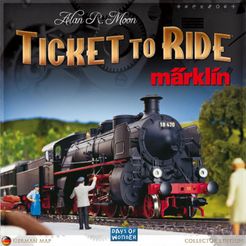
H=1. 9/1/2016 - Ticket to Ride: Marklin (1)

Appropriately enough, the first game that I played after resolving to log my games has a good claim to be called my favourite. There are others games that have more strategic depth that I can get utterly lost in, but there's no game in the 45-90 minute range (the sweet spot) that I would ever prefer to play. I don't think I've ever turned down a game of TTR, and I find it perpetually entertaining after what I suspect is approaching about 100 plays, though at the time of writing I only have 13 in the last so many months. I recently acquired the app to allow me to try out some of the other maps, and while some of them are interesting puzzles, I find myself returning to my old faithful Marklin copy whenever I possibly can.

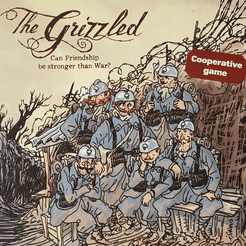
H=2. 31/1/2016 - The Grizzled (3), Ticket to Ride: Marklin (2)

The Grizzled, a gorgeous little co-operative game about a platoon of down-on-their-luck French infantrymen attempting (and mostly failing) to live through to the end of WWI, whose theme I just love and whose gameplay was interesting enough to keep me coming back, at least for a little while. Though I played three games of this one back-to-back while I was back in Australia on the 11th, it took another three weeks for me to play a second game of anything else, as it was a time of a lot of travel and activity and not a lot of time for gaming. When I did game in this time, there was always something new and exiciting to try, and most of those were relatively long Euro-style game that didn't lend themselves to immediately being played again.

H=3. 12/2/2016 - Istanbul (3), Forbidden Desert (3), The Grizzled (3)

While Marklin lay gathering dust in early February, I'd been getting heavy use out of my new acquisition, one that had been hurriedly thrust into my hands as I departed for the plane out of Australia back in January but that I'd wasted no time trying out. Thanks both to its great flexibility of working seamlessly with any player count from 2-5 and to my custom box for it looking more than a little bit intriguing, Istanbul is a nice little number that still boils along well with the games club, especially now that I've acquired the expansion to give it just a touch more variety and unpredictability than the base game had.

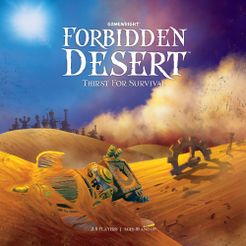
Forbidden Desert is one of the games on this list that I kind of wish wasn't on the list, as I'm not a big fan of this interesting but slightly clumsy cooperative number. It's not that I actively don't like it, it's just that I've got more interesting things to do with my time, especially since we played this exclusively in a Games Cafe surrounded by interesting games... However, my fellows wouldn't let it rest until we'd finally cracked the damn thing, so this saw quite a few games early in the year before dropping off the radar. I'm afraid my experiences with it have so put me off the concept that I'm still yet to play the college copy of the predecessor, Forbidden Island, but I suspect that I'll get to it eventually.

H=4. 30/3/2016 - Codenames (8), 7 Wonders (4), Finca (4), Istanbul (5)


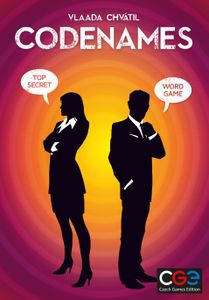
We say goodbye to Forbidden Desert and The Grizzled, but instead welcome a couple of mainstays to the list. Codenames had been easily my most played game of the last part of 2015, so it was honestly surprising that it look this long to make it onto this list, but it would go on to lead the play count for the rest of the year. The ability to play it with wildly divergent player counts and have teams so that pretty much anyone can play, the fact that you can almost never just play it once, combined with the fact that I have access to three different copies so that there's almost always one to hand means that whenever we play games we almost inevitably play a few games of Codenames.

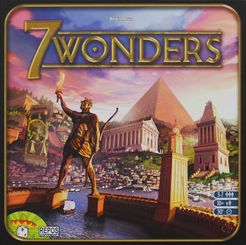
7 Wonders is one of those games that takes a long time to teach, and once you've explained all the rules still leaves people staring at you with betrayal in their eyes and suddenly regretting having agreed to play, but one that is ultimately pretty simple once you're able to get over that initial barrier to entry. It's rare for a fortnight to go past in which I don't play this at least once, as the expansions fill it out nicely and different players mean you're always having to adapt your strategies, and it doesn't take any longer with 7 players than it does with 3, which makes it an excellent candidate for game night when every one if sitting around and wondering what to play.

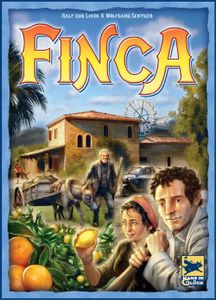
Finca is a surprise addition to this list, as while I'm a big fan of this fruit-trading, donkey-breeding extravaganza, I've really struggled to convince people around here that it's worth the investment of time. Thankfully though, persistence pays off, as I'm slowly building up a little fanbase as I find people willing to look past the frustration that this game can cause to see the joy of the possibilities. Probably not a big enough one to ever get this little favourite of mine back into the H-index list, but enough that I'm not going to suffer another drought of it again like I did after these plays in March.

H=5. 18/5/2016 - Paperback (5), Codenames (12), Istanbul (6), 7 Wonders (5), Ticket to Ride: Marklin (5)

TTR managed to force its way back into the list for this one, but the real new standout was Paperback, the letter drafting game that is almost exactly a combination of Scrabble and Dominion, and which I went straight out and purchased the night that I first played. By this point in the year, I was starting to think seriously about investing in games to bridge the gap between the old tired famil games that many of my college family were familiar with and the games that I was playing with the club, and this one just seemed like far too good an opportunity to pass up.

H=6. 29/6/2016 - Hey! That's My Fish (7), Codenames (18), Istanbul (9), 7 Wonders (8), Ticket to Ride: Marklin (7), Paperback (6)

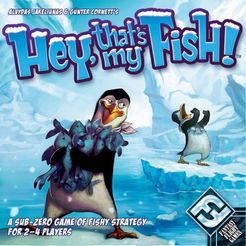
With June came the UK Board Games Expo and a chance to considerably expand my collection by spending far more money than could really be considered sensible. I picked up a number of expansions and a few little games as well as a couple of big ones, but the immediate winner out of my new acquisitions has to be be the beautiful little Hey! That's My Fish, which despite its silly name and kiddy theme is actually an interesting little area-control abstract strategy game that is great to be able to pull out as a filler whenever you need something to get your teeth into a little bit, and which handily fits in your pocket once you've gotten rid of the absurdly large box (a practice that I've continued in the name of ease of transportation despite now actually having space to store game boxes if I wanted to).

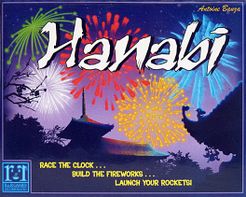
H=7. 8/8/2016 - Hanabi (7), Codenames (31), Istanbul (9), 7 Wonders (8), Ticket to Ride: Marklin (8), Hey! That's My Fish (8), Paperback (7)

The second behemoth game of the year, and the start of a real acceleration of my gaming habits, came with the purchase of Hanabi while I was armed with cash and instructed to head down to my friendly local games store and purchase some titles to fill out the Brasenose College stash. From this point I added a second weekly games night to my repertoire, and Mondays at college became social gaming night, at a less intense level than Wednesdays, but with snacks. Hanabi went down a treat with this crowd, and though their interpretation of the 'no tabletalk' rule leaves something to be desired, I think we've become pretty competent players over the last few months. We should have, too, as we've played it an awful lot. We also bought Codenames at the same time, which partially explains the sudden jump in plays of that.

H=8. 19/9/2016 - Red7 (9), Codenames (36), Istanbul (9) , 7 Wonders (9), Hey! That's My Fish (9), Ticket to Ride: Marklin (8), Hanabi (8), Paperback (8)

Red7 is a fun little filler card game that I'd had all year and had been bubbling along just outside of the top echelon, but that really came into its own as an opener for college games night. When teaching this one I tend to play without the odd-number abilities and just play with the basics, but most people seem willing to make the step up after playing it just a couple of times. I always use the tagline 'If you're not winning, you lose', which never fails to get a confused grin from a new player.

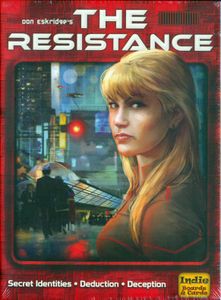
H=9. 6/11/2016 - The Resistance (13), Codenames (61), Hanabi (32), Hey! That's My Fish (14), Red7 (12), Istanbul (11), 7 Wonders (9), Paperback (9), Ticket to Ride: Marklin (9)

Unfortunately, when your main weekly games night becomes more of a social gathering, then there's an increased chance of being forced to play social deduction games. I'm not a big fan of The Resistance or an other Werewolf-like game, but it is quite popular amongst the college crowd so these days I find myself being drawn into the occasional game, which I still prefer to sitting by myself in a dark room. This month in particular it seemed like the Resistance was always on the table, but thankfully the phase has passed and now it's more of a rare event.

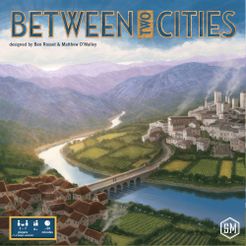
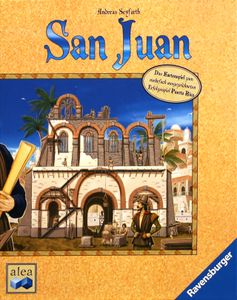
H=10. 8/12/2016 -  Between Two Cities (11), San Juan (10), Codenames (65), Hanabi (49), Red7 (17), Hey! That's My Fish (14), Paperback (14), The Resistance (13), Istanbul (12), 7 Wonders (11)


As term winds up and the students suddenly vacate Oxford, those of use that are left behind find ourselves with a lot of time to get the important gaming stuff done, so we got down to a couple of days of pretty intense gaming action. For the most part, games that took lots of players were often the order of the day, so we ended up playing the Stonemaier Games number Between Two Cities, a game which I continue to believe is better than Sushi Go, despite the wider success of the latter. As you can see from this list, games that are toeing the boundaries of party games are definitely more popular around the college scene, but since college is basically one big party anyway, I guess that's no surprise.

For a brief period of two glorious weeks, San Juan, the card-game version of Puerto Rico and a long-time favourite of mine, was all the rage, being played at least 5 times in a single day (and only one of those even included me amongst the players). It was so popular that two further copies of the game had to be acquired as Christmas presents. Not bad for a game that's been out of print for a while now.

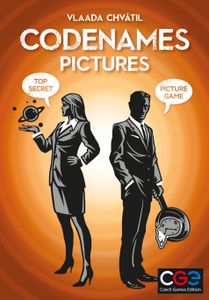
H=11. 9/12/2016 - Codenames: Pictures (11), Codenames (65), Hanabi (49), Red7 (17), Hey! That's My Fish (14), Paperback (14), The Resistance (13), 7 Wonders (13), Istanbul (12), Between Two Cities (11), San Juan (11)

It only took a single day to get from H=10 to H=11. I wasn't kidding about this being a hectic time for board games. We also played quite a few games of Codenames: Pictures, bumping it up into the list in extremely short order after it was acquired. Most people around about these parts seem to prefer to the original, though I myself think the wordy version is ever so slightly superior.

H=12. 4/2/2017 - Ticket to Ride: Marklin (12), Codenames (66), Hanabi (59), Red7 (22), The Resistance (17), 7 Wonders (17),  Paperback (16), Hey! That's My Fish (15),  Between Two Cities (14), Istanbul (13), Codenames: Pictures (13),San Juan (12)

To hit twelve this last weekend, I taught a couple more of my friends to play Ticket to Ride, restoring it back to its rightful place on this list. H-13 seems likely to be a long way away though, as I've got no likely looking party games lurking on the horizon, and the nearest games are languishing all the way back at 8. I think the most likely options are a little game like Micropul suddenly becoming popular around college or my finding some people around to play regular games of Chess or Mahjong with. I wouldn't be surprised to find that the gap between H=12 and H=13 is the longest gap yet, but the thought isn't going to stop me playing games.

With that in mind, I'm off to games club.